ROWAN VALE
The Witch's Mirror: Ancient Protection and Modern Mysticism
The Witch's Mirror—known in German folk tradition as the Hexenspiegel—represents one of the most enduring symbols in European occult practices and protective magic. This reflective talisman has captured the imagination of practitioners, believers, and storytellers for centuries, embodying the belief that reflective surfaces possess the power to deflect negativity, communicate with spirits, and protect against malevolent forces. Today, The Witch's Mirror exists in multiple contexts: as a historical protective amulet, as a tool in contemporary witchcraft, and as a compelling figure in cultural narratives of supernatural revenge and justice.
Historical Origins and Medieval Roots
European Folklore Foundations
The legend of The Witch's Mirror originates from medieval European traditions, with particularly strong roots in Germany and Austria. During a time when belief in witchcraft permeated European society, people sought physical and spiritual protection through talismans and charms. The mirror emerged as one of the most powerful of these objects, based on a fundamental belief: that reflection itself possessed magical properties capable of intercepting harmful intent before it could manifest in the material world.
These early mirrors were typically small, easily portable objects—some hung in homes as household protections, while others were worn as personal amulets. The materials varied, from simple polished metal to more elaborate crafted pieces, but their purpose remained consistent: to serve as a barrier between the physical realm and supernatural threats.
The Logic of Mirror Magic
The protective theory behind The Witch's Mirror operated on several interconnected principles:
Reflection as Reversal: A mirror's inherent function—to reflect images back to their source—was believed to work metaphysically as well. Curses, hexes, and negative energy directed toward the mirror's bearer would be reflected back to the sender, neutralising the threat while simultaneously exposing the attacker's malevolence.
Spiritual Gatekeeping: Mirrors were understood as portals or barriers between physical and spiritual realms. By maintaining control over this boundary, the mirror bearer could prevent unwanted spiritual intrusion while maintaining beneficial connections to protective forces.
Witch Repulsion: Medieval folklore held that witches possessed an aversion to mirrors, particularly their own reflections. The logic was both practical and mystical: witches were believed to be bound by vanity or by a supernatural inability to tolerate seeing themselves reflected, making mirrors effective deterrents against witch-inflicted harm.
The Witch's Mirror as Protective Talisman
Household and Personal Use
In medieval and early modern European homes, The Witch's Mirror occupied a place of significant importance. Families would strategically place these mirrors in windows, doorways, and hearths—locations believed to be vulnerable points where negative energy or witches might attempt entry. The mirror's placement was as intentional as its creation, reflecting a sophisticated understanding of protective magic that integrated physical space with spiritual defence.
For personal protection, individuals wore smaller versions of The Witch's Mirror as amulets. These pieces were often crafted with care, sometimes incorporating additional protective symbols, inscriptions, or materials believed to enhance their power. Wearing such an amulet was thought to create a portable shield, allowing the wearer to move through the world protected from casual hexes and the evil eye.

Integration with Modern Magical Theory
Contemporary magical practice has integrated The Witch's Mirror into broader frameworks of energy work and magical theory. The mirror is understood as:
A tool for energy manipulation that operates according to principles of resonance and reflection.
A device for consciousness expansion that facilitates access to non-ordinary states.
A protective technology that reinforces personal boundaries and energetic sovereignty.
A creative tool for manifesting intentions through reflected and amplified magical will.
Cultural and Cinematic Narratives
The Witch's Mirror as Revenge Tale
Beyond historical tradition and contemporary practice, The Witch's Mirror has become a significant figure in cultural narratives, most notably through cinematic interpretation. In these stories, The Witch's Mirror transforms from a defensive talisman into an instrument of supernatural justice.
The Narrative Framework
The archetypal Witch's Mirror revenge narrative typically follows this structure:
The Injustice: A grave wrong is committed—often the murder or betrayal of someone beloved.
The Magical Tool: A witch or magical practitioner discovers or possesses The Witch's Mirror, recognising its power to bridge the living and spirit worlds.
The Communication: Through the mirror, the practitioner contacts the spirits of the wronged or invokes otherworldly forces.
The Vengeance: Using the mirror as a conduit, dark forces are directed toward the perpetrators, manifesting justice through supernatural means.
The Resolution: The mirror's power ensures that wrongs are righted, though often at a cost.
Thematic Significance
This narrative structure emphasizes several themes:
Justice Beyond Law: When earthly justice fails, supernatural intervention through the mirror restores balance.
Female Power and Agency: The witch (typically female) becomes an agent of justice, using mystical knowledge to protect and avenge.
The Mirror as Conduit: The object itself becomes the crucial instrument, the means by which will is transformed into supernatural action.
Moral Ambiguity: While seeking justice, the witch may employ dark forces, raising questions about the ethics of supernatural intervention.
Cinematic Interpretations
"The Witch's Mirror" (El Espejo de la Bruja), a notable Mexican horror film, exemplifies this narrative. In the film, a witch uses a mystical mirror to communicate with spirits and orchestrate revenge for her goddaughter's death. The mirror serves not merely as a plot device but as the literal and metaphorical centre of the narrative—the means by which the spiritual and physical worlds collide, and through which justice (however dark) is ultimately served.
This cinematic tradition has influenced modern understanding of The Witch's Mirror, creating a compelling counter narrative to its purely protective function. In these stories, the mirror becomes active, aggressive, and purposeful—a tool not just for defence but for transformation and retribution.
The Dual Nature of The Witch's Mirror
Protection and Power
The Witch's Mirror represents a fascinating duality in magical tradition:
Sacred and Profane.
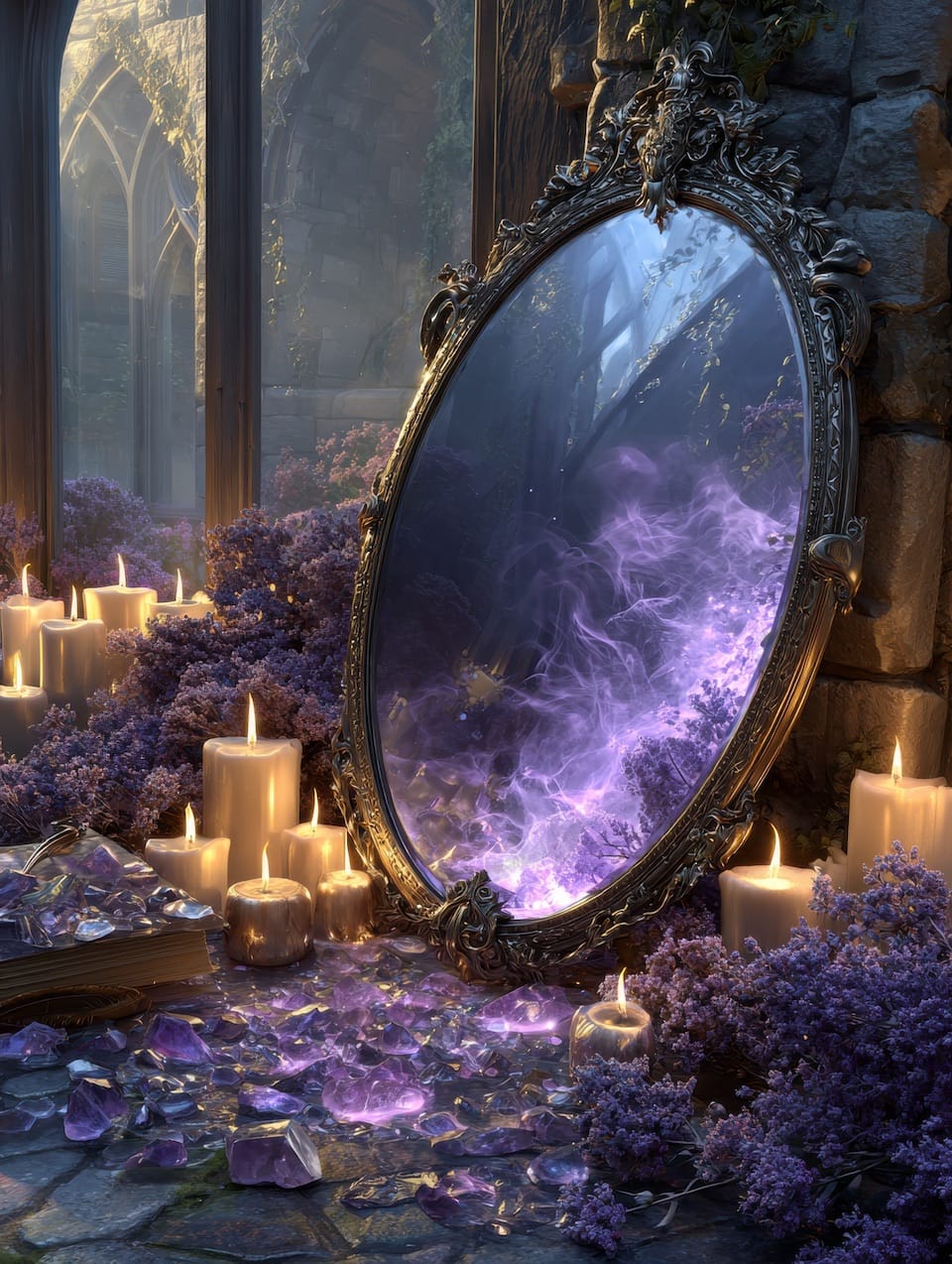
The Witch's Mirror occupies a threshold between sacred and profane magic. As a protective household charm, it participates in the sacred sphere of home protection and family safety. Yet as a tool for contacting spirits and orchestrating revenge, it engages with less obviously benevolent magical forces. This duality reflects the mirror itself—a surface that simultaneously reflects and obscures, reveals and conceals.
Modern Interpretations and Accessibility
Contemporary Witch's Mirror Practice
Today, The Witch's Mirror exists in multiple accessible forms:
Mass-produced amulets featuring mirror designs, available through metaphysical shops and online retailers.
DIY mirror creation through craft and witchcraft communities, allowing practitioners to imbue mirrors with personal intention.
Digital representations in online communities, where the symbol itself is invoked even without a physical object.
Integration into hybrid practices combining historical folk magic with contemporary spiritual frameworks.
The Mirror in Witchcraft Communities
In contemporary witchcraft communities—both online and offline—The Witch's Mirror has become a standard element of magical toolkit recommendations. For beginners, it represents an accessible entry point into practical magic; for experienced practitioners, it serves as a sophisticated tool for advanced magical work.
The renewed interest in The Witch's Mirror reflects broader trends in contemporary witchcraft: the valorization of historical magical knowledge, the integration of folk traditions into modern practice, and the reclamation of female power and agency through magical practice.
---
The Witch's Mirror represents a remarkable continuity in magical tradition spanning from medieval European folk practice to contemporary witchcraft. Whether understood as a simple protective charm hung in a kitchen window, a sophisticated tool for spirit communication and divination, or a dramatic instrument of supernatural justice in cinematic narratives, The Witch's Mirror embodies fundamental magical principles: the power of intention, the efficacy of symbols, and the belief that the boundary between physical and spiritual realms can be negotiated and manipulated.
In its historical context, The Witch's Mirror provided comfort and protection to people living in a world perceived as filled with supernatural threats. In its contemporary manifestations, it continues to serve similar functions while expanding to encompass new magical applications and cultural meanings.
The enduring power of The Witch's Mirror legend lies in its flexibility and resonance. It can be simultaneously protective and aggressive, passive and active, historical and contemporary. As long as people seek protection from harm, wish to communicate with realms beyond ordinary perception, or yearn for justice beyond the reach of ordinary law, The Witch's Mirror—in its many forms—will continue to reflect back the needs and desires of those who invoke its power.
Regards, Rowan.
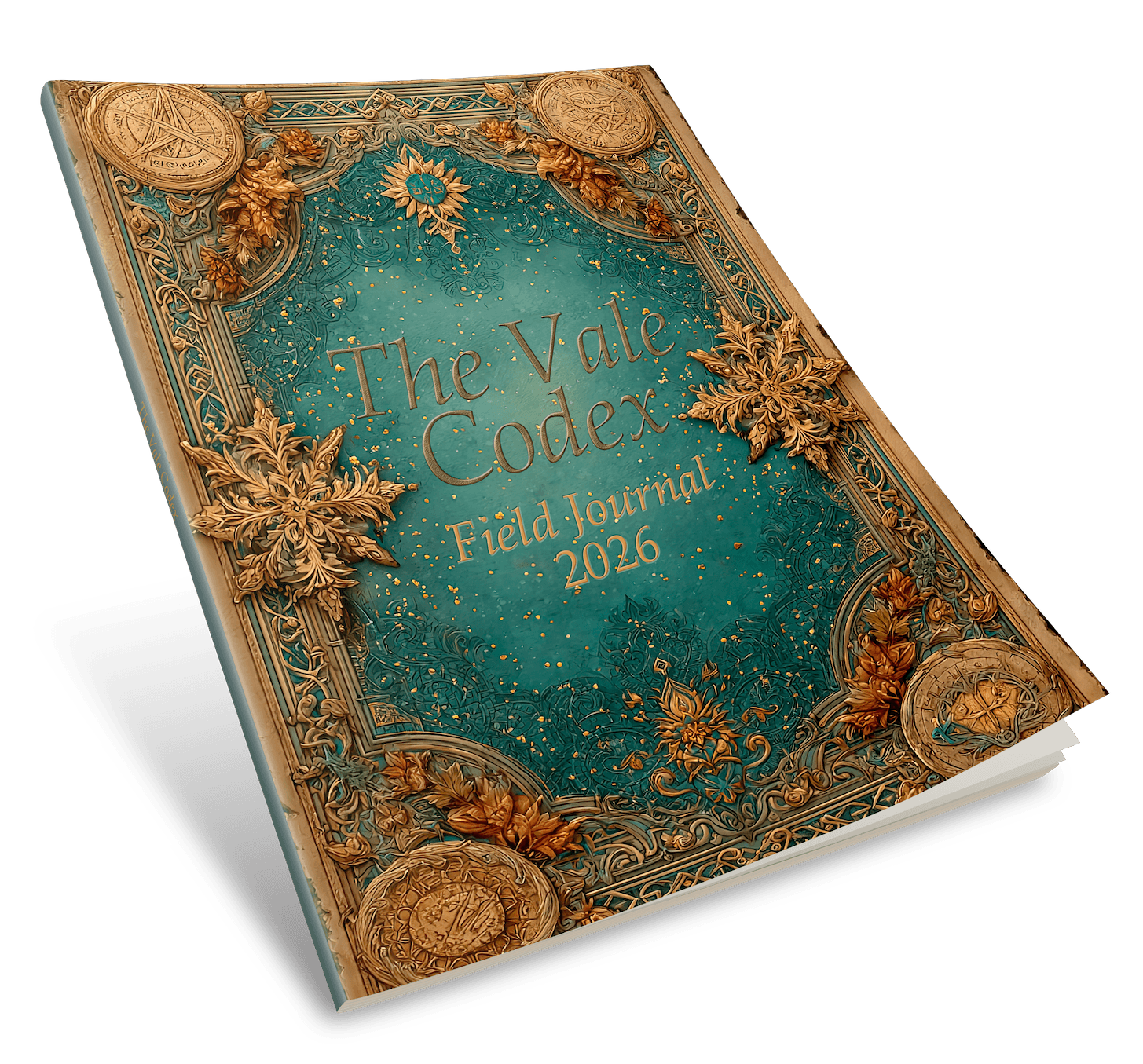
"GREAT NEWS... The 2026 Vale Codex Field Journal is available to download NOW!
The 48-page journal is a friend to carry on your own journey, expanding your mind and illuminating your path.
Tap this link to find out how to get your complimentary PDF copy right now!"
Kind regards, Rowan.