ROWAN VALE
The Whitening of May
Hawthorn Folklore in the Beltane Season
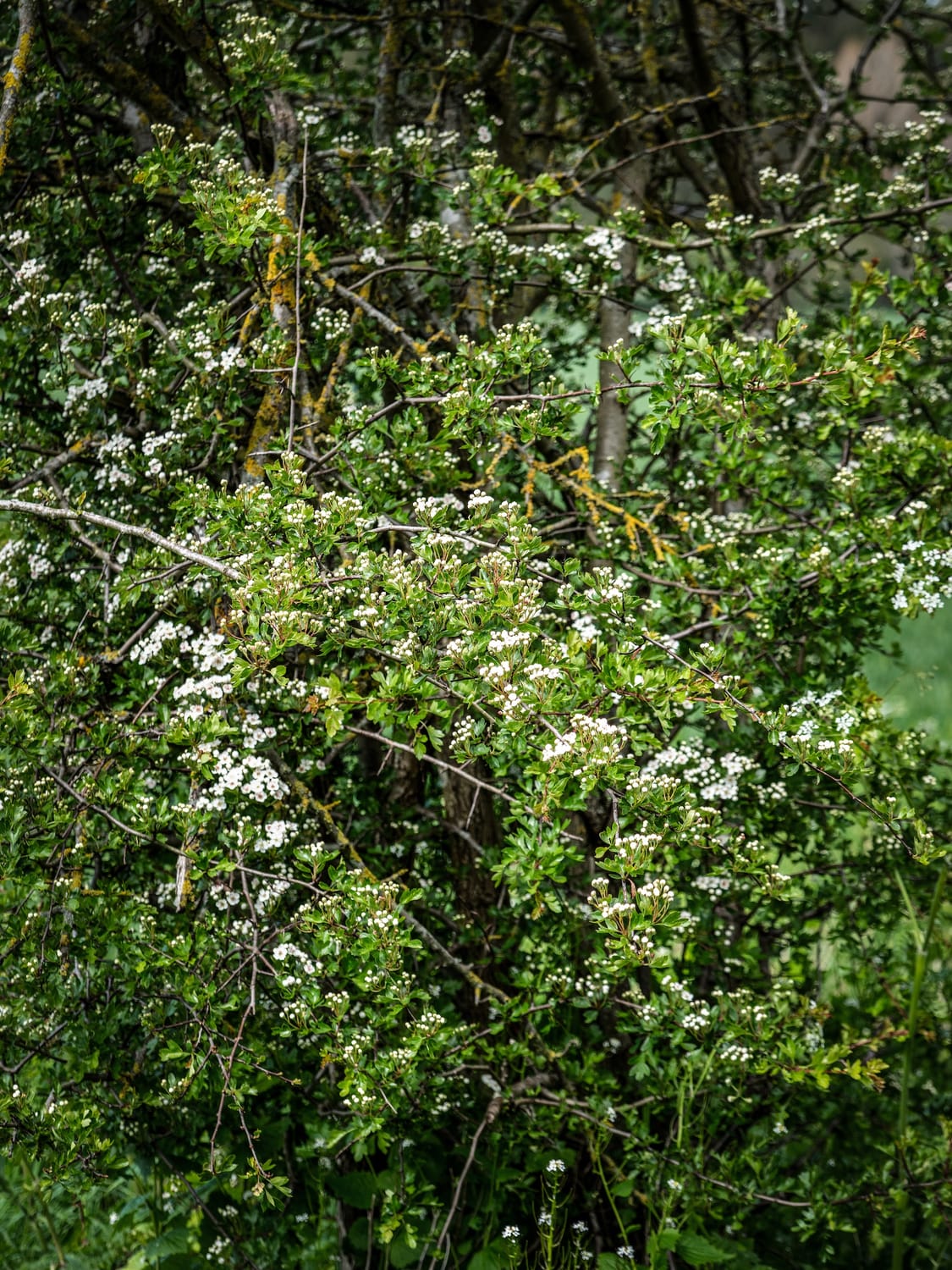
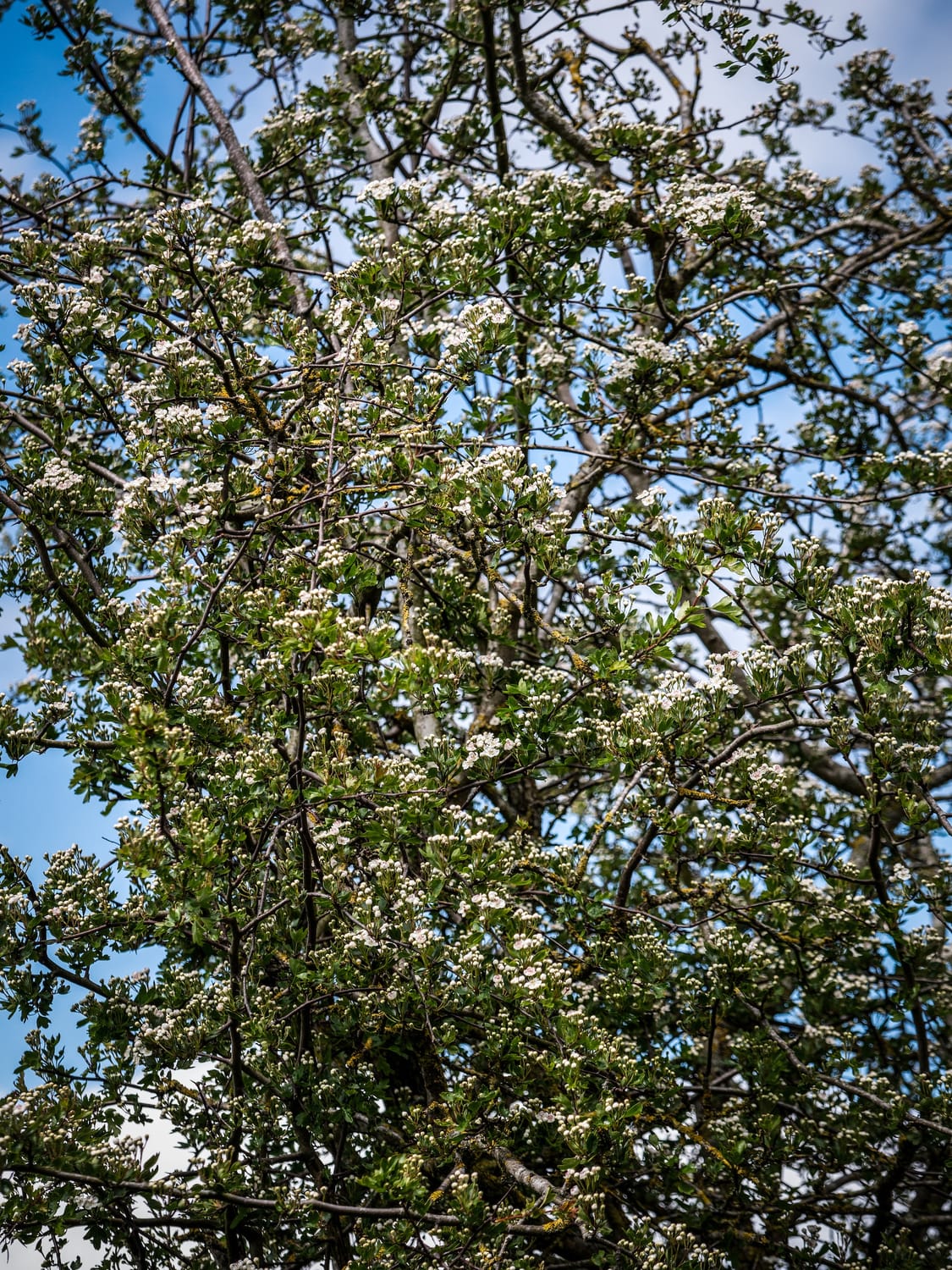
By mid-May, hedgerows begin to pale at the edges. What first appears as mist caught in the branches slowly reveals itself as hawthorn blossom — thousands of small white flowers opening all at once, softening lanes, fields, and forgotten boundaries beneath what country folk once called “the whitening.”
There is something almost uncanny about it. One week the tree stands subdued and thorned; the next, it seems lit from within.
This year, the hawthorn aligns with tonight's new moon of 16th May, arriving at the threshold between spring’s first greening and the fuller heat of early summer. In Celtic tradition, hawthorn has long been associated with Beltane, the fire festival that marks the turning into the fertile half of the year. It carries both protection and wildness within it — a tree of thresholds, balance, and contradiction.
The meaning of hawthorn blossom in May
Ruled in folk astrology by Mars, hawthorn is often linked with active, outward-moving energy. Yet the tree itself resists simple definition. Its fierce thorns guard clusters of delicate white blossom, and later in the year those same branches hang heavy with crimson berries against the darkening days of autumn. It embodies both tenderness and defence, bloom and blood, softness and warning.
For centuries, hawthorn was known simply as the May tree. Its flowering branches were gathered during Beltane celebrations and woven into garlands, maypoles, bridal decorations, and doorway charms. To bring hawthorn into the home during May was considered a blessing — an invitation for fertility, vitality, and good fortune to enter with it. Outside of this seasonal window, however, the tree was treated with far greater caution.
Hawthorn folklore and Beltane traditions
In British and Irish folklore, hawthorn is deeply entwined with the faery realm. Solitary trees growing beside wells, crossroads, or ancient boundaries were especially revered and rarely disturbed. Cutting one down was thought to invite misfortune, not because the tree itself was malicious, but because it stood as a living marker between worlds. Hawthorn belongs to that old category of plants that seem to carry atmosphere around them — species that alter the feeling of a landscape simply by being present.

The Ogham symbol for the Hawthorn
Botanically, hawthorn belongs to the Rosaceae family, sharing lineage with rose and apple. Like its relatives, it has long been associated with the heart, both physically and symbolically. Herbal traditions across Europe have used hawthorn leaves, flowers, and berries as a tonic for the cardiovascular system, believed to support circulation, regulate blood flow, and strengthen the heart over time.
Spiritual meaning of the hawthorn tree
Yet hawthorn’s medicinal reputation extends beyond the body alone. In folklore and plant medicine alike, it's often considered a companion for grief, heartbreak, and emotional exhaustion — a tree that steadies what has become overwhelmed or tender through loss. Its medicine is not dramatic or immediate. It works slowly, quietly, restoring rhythm where rhythm has been disturbed.
To spend time with hawthorn in May is to encounter the season at its fullest expression. Bees gather noisily among the blossoms. The scent — sweet, musky, almost overripe — drifts heavily in warm air. Beneath the flowers, the branches remain armed with long thorns, a reminder that beauty in the natural world is rarely separate from defence.
Hawthorn folklore and Beltane traditions
There are many simple ways to work with hawthorn during this season. The young leaves and blossoms can be dried for tea. Flower crowns can be woven around fallen sprigs and flexible willow. Or the practice may be quieter than ritual: sitting beneath the tree at dusk, leaning against its trunk, and allowing the mind to settle into observation. Resting quietly beneath the branches, listening to birdsong moving through the hedgerows, allowing the nervous system to slow to the rhythm of the landscape itself is thought to be communing with faery-kind.
Hawthorn does not ask to be hurried. It stands at the meeting place between worlds — spring and summer, protection and openness, folklore and medicine. In the whitening days of May, it's a reminder that transformation is often thorned before it blooms.
All the best, Rowan.
"GREAT NEWS... The 2026 Vale Codex Field Journal is available to download NOW!
The 48-page journal is a friend to carry on your own journey, expanding your mind and illuminating your path.
Tap this link to find out how to get your complimentary PDF copy right now!"
Kind regards, Rowan.