ROWAN VALE
The Mystical Rowan - Guardian of Ancient Traditions
As we move gently into the birth of this new year and what seems like endless days of rain, sleet, snow, and grey skies, it’s easy to miss the sense of awakening beneath our feet. Despite the weather, the life force of nature moves forward relentlessly, as it has for eons, well before man inhabited the Earth, and will do long after the era of man has passed.
The quickening of Imbolc, observed in early February, has passed, and now, the Rowan (Mountain Ash, the Faerie or Witch’s Tree in northern folklore, and Luis in the Celtic Ogham) draws attention to the life stirring around and underneath us.
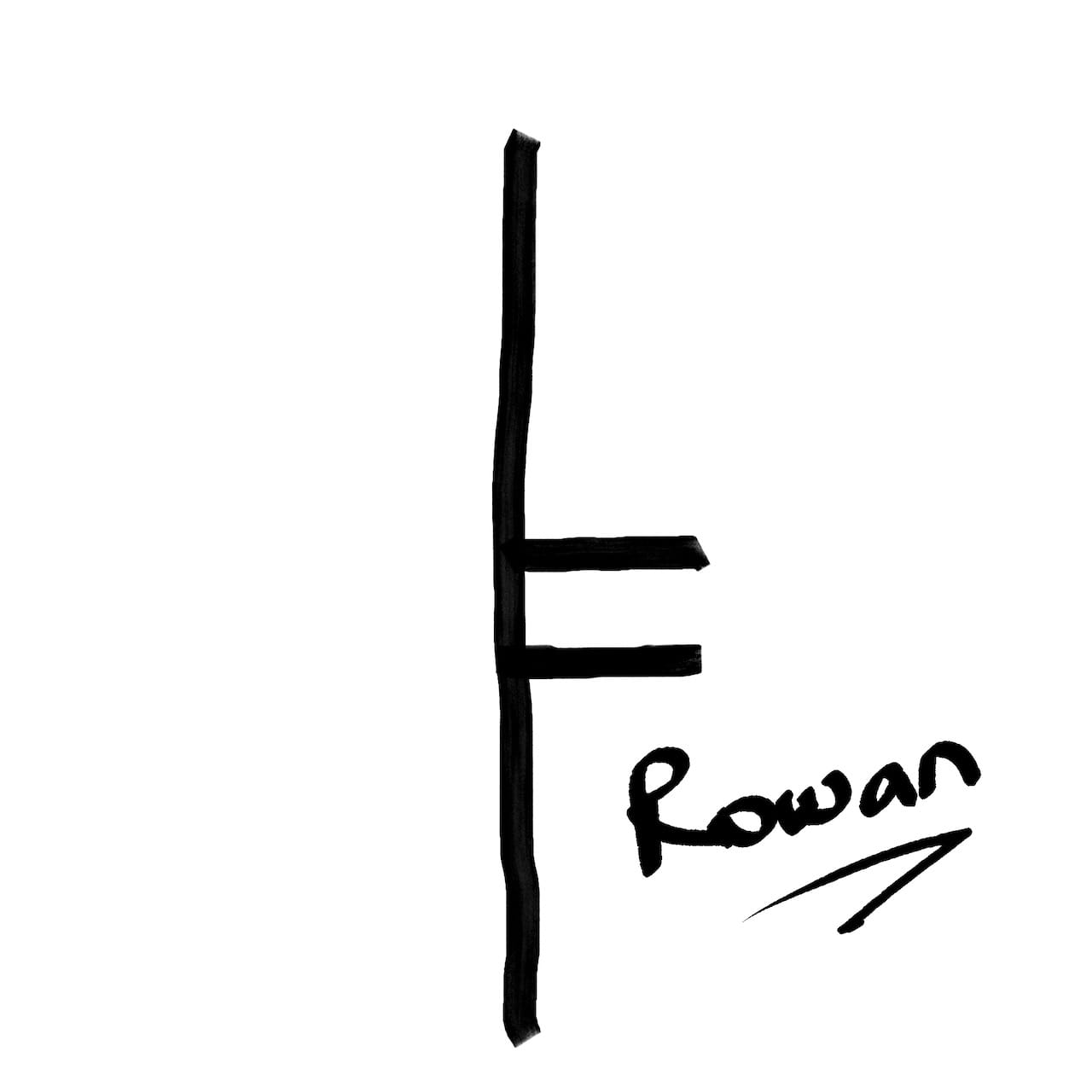
The Ogham symbol for Rowan
The Rowan tree is deeply embedded in many myths and legends but no more so than in Celtic, Norse, Scandinavian, Greek, and British Isles folklore. It is widely regarded as a powerful symbol of protection, magic, and connection between the natural and spiritual worlds.
Protective Symbolism and Folklore
In the British Isles and Celtic traditions, the Rowan is known as a tree that protects against witchcraft, enchantment, and evil spirits. Its red berries, each marked with a tiny five-pointed star or pentagram (an ancient protective symbol), were believed to ward off malevolent forces. People carried sprigs or crosses made from Rowan wood, often bound with red thread, to safeguard themselves, their homes, and livestock from harm.
The tree is often found near homes or ancient sites like stone circles and burial grounds to protect the inhabitants and the spirits of the dead. In Scotland and Ireland, there was a strong taboo against cutting down Rowan trees, reflecting its sacred status.
Farmers used a run of Rowan hoops in May and passed their livestock through to ensure fertility and protection. Small children sometimes had pieces of Rowan sewn into their clothing to protect them from mischievous faeries.
Mythological Origins and Stories
Norse Mythology: The god Thor was saved by grabbing a Rowan tree bent over a fast-flowing river in the underworld. It is also said that the first woman was made from a Rowan tree, while the first man came from an ash tree. Rowan wood was used for rune staves, linking it to divination and magic.
Celtic Mythology: The Rowan is associated with power, vision, healing, balance, and transformation. Druids considered it sacred and used its wood for wands, staffs, and ceremonial robes dyed with its bark and berries. It was seen as a bridge between the human world and the Otherworld.
Greek Mythology: The Rowan is connected to a story where the goddess Hebe’s magical chalice of ambrosia was caught by demons. During a battle to recover it, drops of eagle blood and feathers fell to earth and became Rowan trees, symbolising life and protection.
Finnish Mythology: The goddess Rauni, in the form of a Rowan tree, mated with the thunder god Ukko, giving birth to all plants on earth, emphasising the Rowan’s role in creation and fertility.
Magical Uses and Beliefs
Rowan wood was traditionally used for making walking sticks, tool handles, spinning wheels, and magical implements like wands and dowsing rods, believed to carry protective and healing energies.
Its berries were used in rituals and magic to protect homes and individuals, and to prevent milk from curdling when stirred with a Rowan twig.
The tree was considered a "Traveller’s Tree," believed to prevent travelers from getting lost.
In Scandinavian legends, “flying rowans” (Rowans growing in unusual places) were especially potent sources for charms and protection.
Symbolism
The red berries symbolise blood, life, death, and renewal, linking the Rowan to cycles of nature and spiritual rebirth.
It was also called a Faerie or Witch’s tree, inhabited by benevolent faeries that protected against darkness and evil spirits.
The Rowan tree is a powerful emblem of protection, magic, and spiritual connection across many cultures. Its presence in mythology and folklore highlights its revered status as a guardian against evil, a symbol of life and renewal, and a sacred bridge between worlds.
Regards, Rowan.
"GREAT NEWS... The 2026 Vale Codex Field Journal is available to download NOW!
The 48-page journal is a friend to carry on your own journey, expanding your mind and illuminating your path.
Tap this link to find out how to get your complimentary PDF copy right now!"
Kind regards, Rowan.