ROWAN VALE
The Blood Moon
A Celestial Spectacle Steeped in Myth -
Look up at the night sky tonight, September 7, 2025, and you might witness one of nature’s most dramatic displays: a Blood Moon. This age-old phenomenon occurs during a total lunar eclipse, when the Earth moves directly between the Sun and the Moon, casting its shadow across the lunar surface. But rather than turning black, the Moon glows with a deep, eerie red.
Why red? Sunlight passing through Earth’s atmosphere gets filtered—blue light is scattered away, while the longer red wavelengths bend around our planet to illuminate the Moon. The result is a breathtaking, coppery glow that’s completely safe to view with the naked eye.
The term “Blood Moon” can refer to three things: the red Moon during an eclipse, a series of four total eclipses (a lunar tetrad), or even the traditional name for October’s full Moon (the Hunter’s Moon). But the most captivating use is for the eclipse itself.
Tonight's the night
This upcoming total lunar eclipse will be fully visible across Europe, Africa, Asia, and Australia. It rises over Africa and Europe and sets over the central Pacific. And there’s a bonus: the eclipse occurs near the Moon’s perigee, meaning it will appear larger than usual—a so-called supermoon eclipse.
For viewers in the UK:
The eclipse begins before moonrise, so the Moon will already be partially eclipsed as it rises. In London, moonrise is around 7:30 PM BST, just after the peak of the eclipse (which occurs at 7:11 PM). From then until about 9:55 PM, you can watch the Moon gradually emerge from totality and pass through the partial phases. For the best view, find a spot with a clear eastern horizon and a bit of elevation—the Moon will be low in the sky, so an unobstructed view is key.
Myths and Legends: When the Moon Turned Red
Throughout history, the Blood Moon has captivated the human imagination—often with a mix of awe and fear. Ancient cultures around the world wove rich myths to explain why the Moon sometimes bled.
Devouring Beasts and Cosmic Battles
- In Inca mythology, a jaguar was thought to be attacking the Moon. People would make noise to scare it away, fearing it might turn to Earth next.
- Norse legends told of the wolf Hati chasing the Moon—catching it during an eclipse and bringing temporary darkness.
- The Chinese saw a celestial dragon swallowing the Moon, and beat drums to frighten it off.
- Indian lore spoke of Rahu, a demon beheaded but still living, who occasionally swallows the Moon—only for it to escape again.
Symbolic Harm and Rituals
- The Hupa tribe of California believed the Moon was wounded by its own pets when it failed to provide food—healing rituals were performed in response.
- In Mesopotamia, eclipses were omens of disaster. A substitute king was put in place to absorb the misfortune.
- The Batammaliba people of Togo and Benin saw eclipses as a sign of conflict between the Sun and Moon—and used the event as a time to reconcile and make peace.
Cultural Omens and Beliefs
- Christian traditions sometimes interpreted Blood Moons as divine warnings or signs of Judgment.
- In Indian culture, pregnant women were advised to take precautions during eclipses, and food was covered to avoid contamination.
- Many societies performed healing rituals, believing the Moon was injured and in need of protection.
These stories reveal a universal human tendency to find meaning in the cosmos—whether through fear, hope, or the desire for harmony.
A Unifying Wonder
Today, we understand the science behind the Blood Moon, but that doesn’t make it any less magical. It’s a reminder that we all share the same sky—a canvas for both science and story.
So tonight, September 7, 2025, step outside, look east, and take in the sight. You’ll be watching the same event that inspired dragons, wolves, and warriors across millennia—a cosmic performance that continues to unite us under one reddened Moon.
Clear skies and happy viewing!
Rowan.
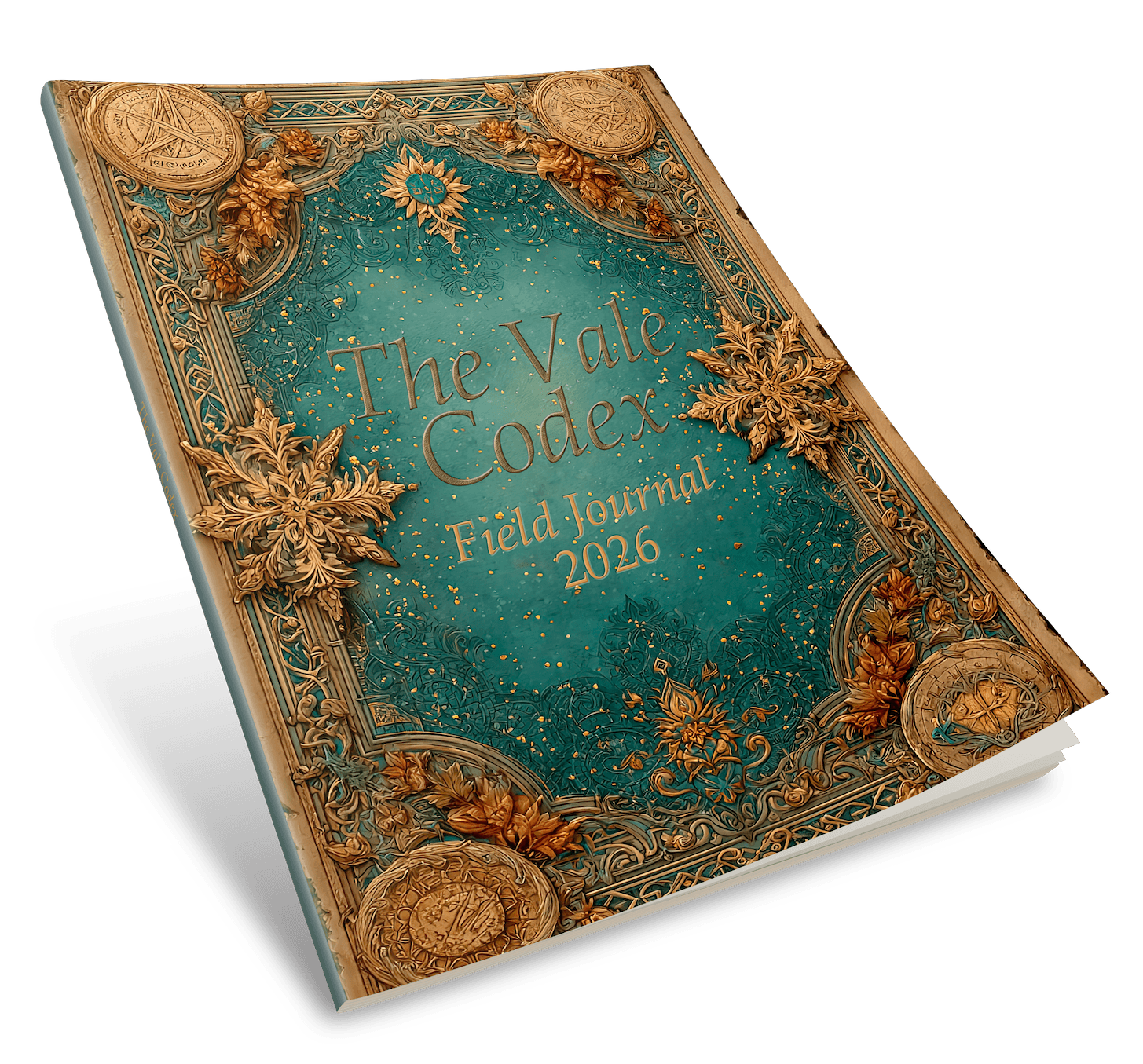
"GREAT NEWS... The 2026 Vale Codex Field Journal is available to download NOW!
The 48-page journal is a friend to carry on your own journey, expanding your mind and illuminating your path.
Tap this link to find out how to get your complimentary PDF copy right now!"
Kind regards, Rowan.