ROWAN VALE
The Alder - Tree of the Rising Waters
The Alder: Tree of the Rising Waters
In early spring, when the land still carries the damp memory of winter, the alder tree begins quietly preparing for the new season. While most trees remain bare and hesitant, the alder is already stirring along riverbanks, marsh edges, and wet woodland hollows. Its reddish catkins lengthen in the pale light, and the landscape begins to soften from winter’s stillness into the flow of spring.
For those who follow the turning of the seasons—whether through nature observation, folklore, or spiritual practice—the alder holds a particular place in the story of spring. It is a tree of water, renewal, and quiet resilience, rooted where earth meets stream, thriving in the shifting places where life begins again.
A Tree of the Water’s Edge
The most common species in Britain is the Alnus glutinosa, often called the common alder or black alder. You’ll find it growing naturally along rivers, beside lakes, in marshland, and anywhere the soil holds plenty of moisture.
Alder is unusual among native trees for its ability to flourish in saturated ground. Its roots form a complex network that stabilises riverbanks and prevents erosion, helping shape the landscape itself. Beneath the soil, alder roots host nitrogen-fixing bacteria that enrich the earth, quietly restoring fertility to depleted ground.
In ecological terms, alder is what scientists call a pioneer species. It is among the first trees to colonise disturbed or flooded land, preparing the way for other plants and woodland life to follow. Where alder grows, ecosystems slowly rebuild themselves.
This quality gives alder a symbolic resonance with the season of spring. Just as the tree restores the soil, spring restores the land after winter’s dormancy. Life begins again in the soft mud along the water’s edge.
Early Signs of Spring
Long before many trees leaf out, alder displays one of the earliest floral signals of the year: its catkins.
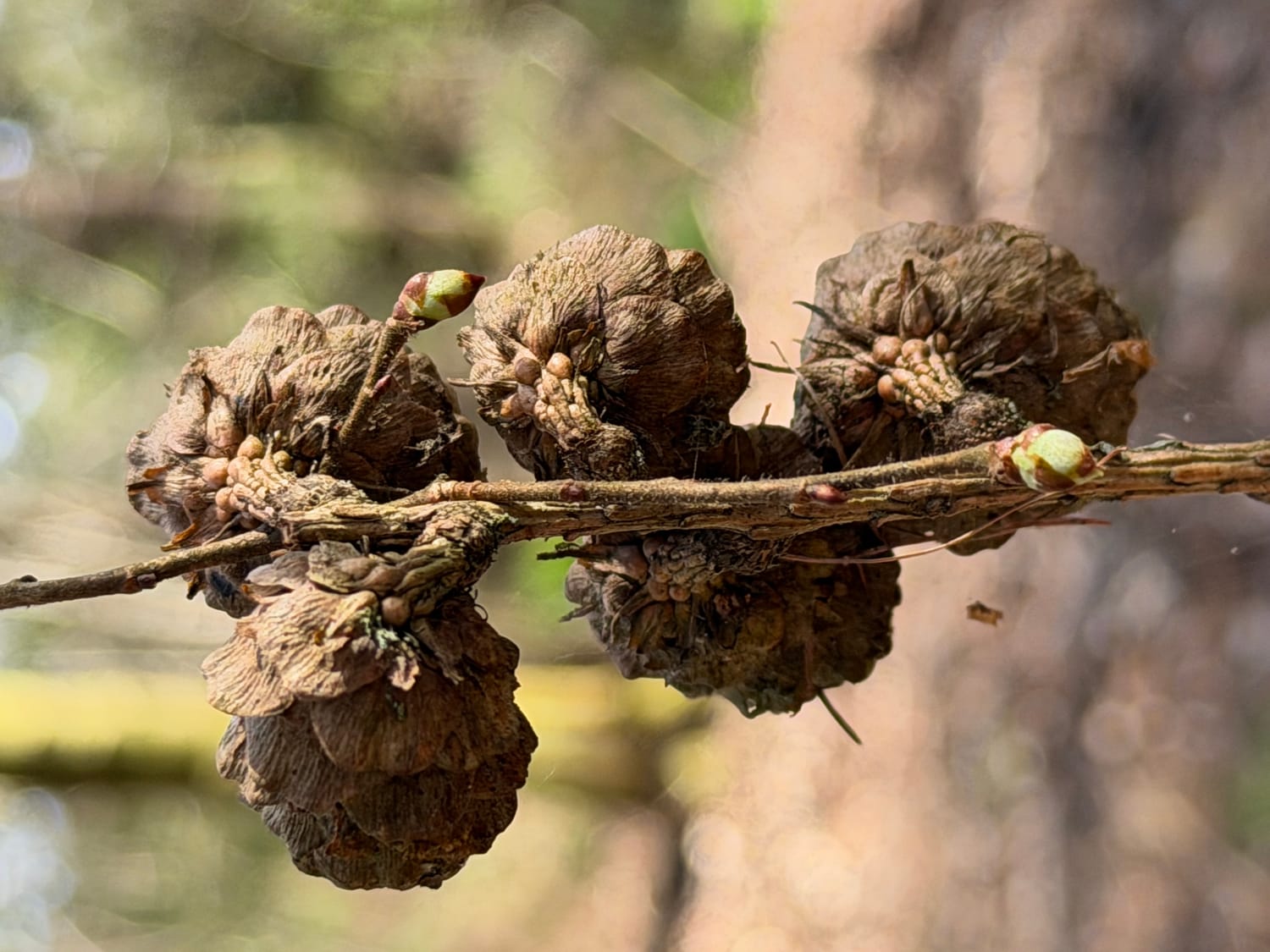
By late winter and early spring, the tree carries two kinds of flowers. The male catkins hang in long reddish tassels, releasing clouds of golden pollen when touched by the wind. The female flowers are smaller and more subtle, eventually developing into tiny cone-like structures that remain on the tree throughout the year.
These dark woody cones—often mistaken for miniature pine cones—become a familiar sight beside streams and woodland paths. They persist through winter and fall in early spring, scattering seeds along the water.
For naturalists and walkers, alder catkins are one of the small seasonal markers that signal the turning year. They appear quietly, often before anyone notices that spring has truly begun.
The Red Heart of the Alder
One of the most intriguing qualities of the alder appears when its wood is cut. Freshly exposed alder wood turns deep reddish-orange, as if the tree itself were bleeding.
This unusual transformation has captured the human imagination for centuries. In European folklore, the alder was sometimes called the “bleeding tree.” The sudden red colour was thought to represent the life force of the tree, and cutting an alder was once considered an act requiring respect or ritual care.
Over time the wood darkens to a warm honey-brown, losing its dramatic colour. Yet that first flash of red has long shaped the tree’s reputation as a living, almost sentient presence within the forest.
Alder in Celtic Lore
In the ancient Celtic tree traditions, alder held a significant place. In the Ogham alphabet, the alphabet of early Ireland that associated trees with letters and meanings, alder was linked to the letter Fearn.
Fearn was traditionally associated with protection, resilience, and the guiding power of water.
The tree’s relationship with rivers may explain this symbolism. Alder roots hold the edges of streams together, protecting the land from being washed away. In mythic interpretation, this became a symbol of emotional stability and the ability to remain steady through changing circumstances.
Some traditions also saw alder as a tree connected to warriors and guardians, perhaps influenced by the red colour of its wood. Shields were sometimes believed to have been made from alder, though historical evidence is mixed. Even so, the image of the alder as a protective tree persisted in folklore.

The Ogham symbol for Alder
A Bridge Between Worlds
Trees growing beside water have always carried an air of mystery. Streams and rivers are natural boundaries—places where landscapes change, paths divide, and reflections shimmer between sky and earth.
Because alder thrives in these threshold spaces, it has often been viewed as a liminal tree: one that stands between worlds.
Water itself has long been associated with intuition, dreams, and emotional depth. Alder, rooted in that flowing environment, seems to embody the same qualities. In seasonal symbolism, it represents the ability to move with life’s currents rather than resisting them.
During spring, when snowmelt swells rivers and rain feeds the soil, alder stands firmly within the rising waters. It reminds us that growth often begins in the most fluid and uncertain conditions.
Wildlife and the Living Ecosystem
Beyond myth and symbolism, alder plays a vital role in the natural world.
Its leaves provide food for insects and several moth species whose caterpillars depend specifically on alder foliage. These insects in turn support birds and other wildlife.
The seeds produced by alder cones are particularly important for small birds such as the Eurasian siskin and the European goldfinch, which feed on them during late winter and early spring.
Because alder often grows along watercourses, its fallen leaves also enrich aquatic ecosystems. As they decompose in streams, they provide nutrients that support microorganisms and freshwater insects—the base of the food chain for fish and amphibians.
In this way, alder does not simply inhabit the landscape. It sustains entire networks of life.
Alder and the Energy of Spring
In seasonal symbolism, each tree seems to echo a different stage of the year’s unfolding story.
Oak speaks of strength and midsummer vitality. Hawthorn embodies the blossoming magic of May. But alder belongs to the earlier chapter—the moment when winter loosens its grip and water begins to flow freely again.
Spring is not always gentle. It is often muddy, windy, and unpredictable. Rivers swell, soil softens, and new growth emerges in fragile shoots. Alder mirrors this transitional energy perfectly.
Its message is not simply renewal, but adaptation.
The tree shows how life continues even in shifting ground. Where water rises, alder roots grow deeper. Where soil erodes, its tangled root systems hold firm.
For those who follow seasonal rhythms or nature-based spirituality, alder can be seen as a quiet teacher of resilience.
Observing Alder in the Landscape
If you walk beside rivers or wetlands in Britain during early spring, alder trees are easy to recognise once you know what to look for.
Their leaves are rounded and slightly notched at the tip rather than pointed. The bark is dark and fissured, often appearing almost charcoal-black in damp light. Hanging catkins sway gently in the wind, releasing pollen that dusts the air like golden smoke.
Beneath the branches, the ground is often scattered with last year’s tiny cones.
Standing beside an alder grove in spring has a distinctive atmosphere. The air feels moist, alive, and full of quiet movement. Water slips through roots and stones while birds call from the branches overhead.
It is a place where the season feels especially present.
A Tree for the Turning Year
For those who follow the Wheel of the Year, the alder aligns closely with the season around Ostara, when daylight and darkness balance and the natural world moves decisively toward growth.
The symbolism is fitting. Ostara marks the return of life, but it is still a threshold moment—a crossing from winter into the fertile months ahead.
Alder, growing between land and water, stands naturally within such thresholds.
It reminds us that spring is not only about flowers and sunshine. It is also about transformation, the unseen work happening beneath the surface, where roots strengthen and new life prepares to emerge.
The Quiet Guardian of Spring
Unlike oak or yew, alder rarely commands dramatic attention. It grows quietly in the margins of the landscape, beside streams and in marshy hollows where few other trees thrive. Yet its role is profound.
It protects riverbanks, nourishes soil, shelters wildlife, and marks the subtle turning of the seasons. In folklore it guards the boundary between worlds; in ecology it helps landscapes renew themselves.
And in spring, when the waters rise and the earth begins to soften again, the alder stands ready—steady, patient, and deeply rooted in the flow of life.
For anyone walking the riversides in early spring, noticing the alder is like discovering a small secret of the season.
A reminder that renewal often begins quietly, in the damp places where water and earth meet.
Regards, Rowan.
"GREAT NEWS... The 2026 Vale Codex Field Journal is available to download NOW!
The 48-page journal is a friend to carry on your own journey, expanding your mind and illuminating your path.
Tap this link to find out how to get your complimentary PDF copy right now!"
Kind regards, Rowan.