ROWAN VALE
Star Soil and How to Use It
Astrology as a Tool for Earth-Based Creativity
Astrology is often talked about as something abstract—charts, symbols, personality traits floating somewhere above daily life. But at its roots, astrology is far more practical and grounded. It began as a way of tracking time, seasons, and patterns in nature. Long before it was used to describe individual character, it helped people decide when to plant crops, travel, rest, or prepare for hardship.
Seen this way, astrology belongs firmly on the ground. It is less about prediction and more about timing. Less about destiny and more about paying attention.
The idea of star soil brings astrology back into this earthy role. It treats the sky as a guide for creative rhythms, much like weather or seasons influence growth in a garden. For writers, artists, and other makers—especially those drawn to nature or seasonal living—astrology can become a simple, useful framework for working in tune with natural cycles rather than against them.
Astrology as a Seasonal Clock
Originally, the zodiac functioned like a calendar. Each sign corresponded to a particular time of year and reflected what was happening in the natural world. Aries arrived with early spring urgency. Leo aligned with summer confidence and visibility. Virgo reflected harvest work and careful sorting. Capricorn marked winter effort and endurance.
These signs were not about personality types. They described what kind of time it was.
When we return to this seasonal understanding, astrology becomes easier to work with. Instead of asking, “What does this say about me?” we can ask, “What kind of energy is available right now?” That shift makes astrology practical rather than mystical.
Creativity Works Like Growing Things
Creative work follows natural patterns, whether we acknowledge them or not. Ideas need time to form. Projects go through stages of excitement, effort, frustration, rest, and renewal. Trying to force constant output often leads to burnout rather than good work.
Astrology offers a language for these shifts. Fire-heavy periods tend to support starting things, taking risks, and experimenting. Earth-focused times are better for refining, editing, and building something solid. Air seasons encourage thinking, researching, and discussing ideas. Water periods favour emotional depth, memory, and reflective work.
None of these phases are better than the others. Each supports a different kind of creative task. Astrology simply helps name what kind of “soil” you are working with at a given time.
Moving Away from Soul-Destroying Productivity
Modern creative culture often rewards speed and visibility. Astrology quietly challenges that by normalising rest, delay, and revision.
Cycles like retrogrades, eclipses, and dark moons are reminders that pauses are part of any healthy system. In nature, fields lie fallow. Trees lose their leaves. Seeds spend long periods underground. These phases are not failures—they are preparation.
When creativity slows, astrology offers reassurance rather than pressure. It reframes difficulty as part of a cycle rather than a personal flaw. That perspective alone can be deeply supportive for long-term creative work.
Astrology as a Storytelling Tool
Astrology is also useful for storytelling, not because it dictates plot, but because it offers familiar patterns. The planets and signs come with long histories of meaning built through myth and observation. Mars relates to conflict and drive. Venus relates to attraction, value, and connection. Saturn relates to limits, time, and responsibility.
These are not rigid definitions. They are starting points. For writers, they function like shared cultural shorthand—helpful when shaping characters, themes, or emotional arcs.
Used lightly, astrology adds depth without becoming complicated. It supports storytelling without turning it into a system that must be obeyed.
Learning in Cycles, Not Straight Lines
One of astrology’s strengths is that it encourages learning over time. The same season returns every year, but we meet it differently each time. What you understand about autumn, endings, or responsibility at one stage of life will change later on.
This cyclical learning mirrors how people used to gain knowledge: through repetition, observation, and experience rather than quick mastery. Astrology rewards attention more than expertise. The more you notice patterns, the more useful it becomes.
Astrology as Creative Weather
A helpful way to think about astrology is as weather rather than instruction. Weather affects conditions but does not control choices. A rainy day may change how you work, but it does not remove your agency.
Astrological patterns work the same way. They describe the atmosphere you are moving through. Some days support clarity and action. Others invite review, rest, or emotional processing. Knowing this helps you plan more realistically.
For creatives, this approach reduces frustration. Instead of fighting the moment, you work with it.
Bringing the Sky Back to Earth
Astrology becomes most useful when it is connected to lived experience. Noticing how certain seasons feel in your body, your mood, your landscape, and your creative energy matters more than memorising meanings.
What does winter feel like where you live? How does spring affect your focus or motivation? Over time, astrology becomes personal and practical, shaped by observation rather than belief.
A Long-Term Creative Practice
Astrology is not about quick answers. Like gardening, it rewards patience. Its value builds slowly as patterns repeat and deepen.
For earth-based creatives, astrology offers a way to work sustainably. It supports long projects, seasonal rhythms, and creative lives that unfold over years rather than weeks.
The sky does not tell you what to make. It simply reminds you that timing matters. When creativity is treated as something living—rooted, seasonal, and responsive—it grows with more strength and less strain.
All the best, Rowan.
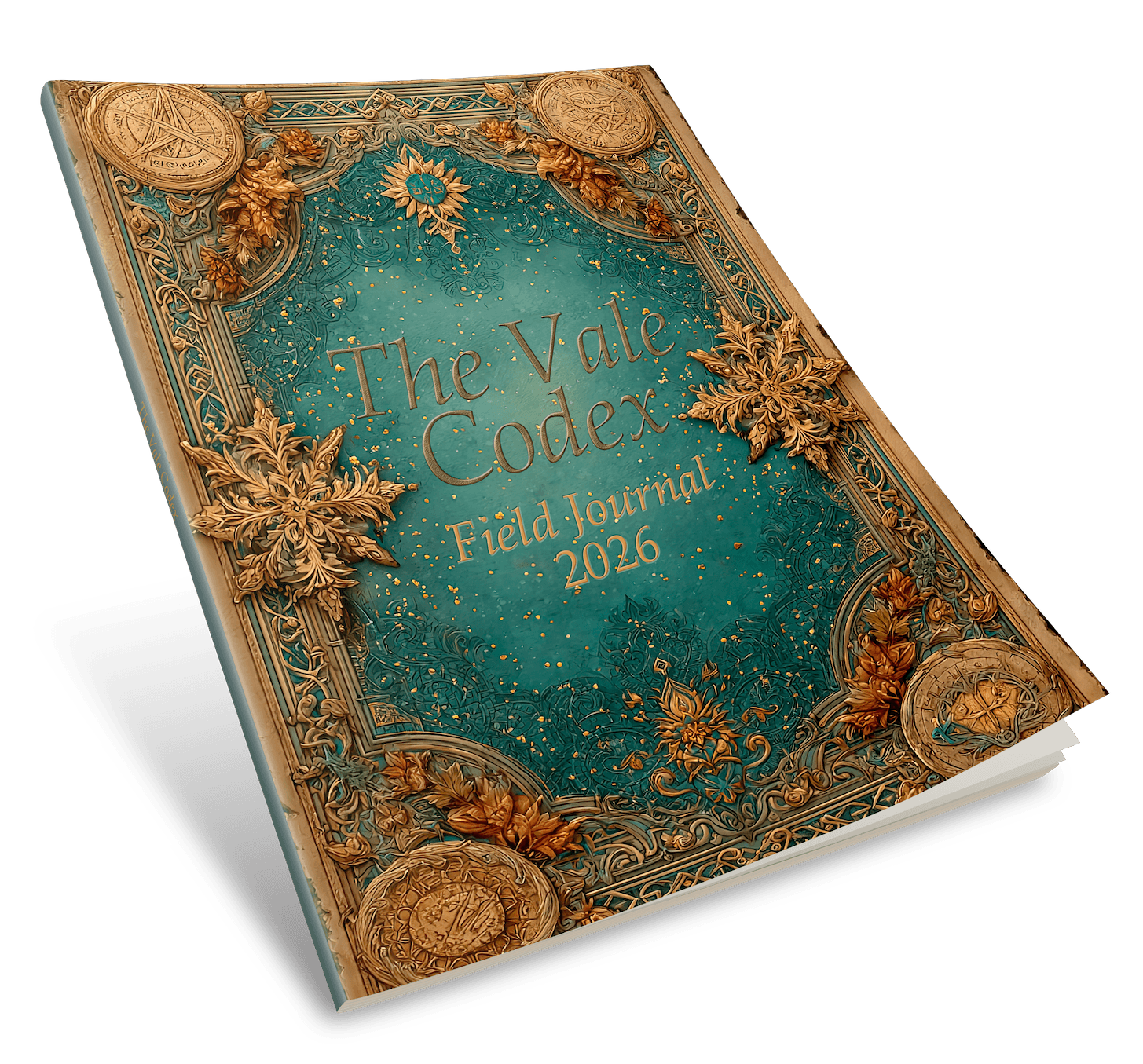
"GREAT NEWS... The 2026 Vale Codex Field Journal is available to download NOW!
The 48-page journal is a friend to carry on your own journey, expanding your mind and illuminating your path.
Tap this link to find out how to get your complimentary PDF copy right now!"
Kind regards, Rowan.