ROWAN VALE
Symbolism, Folklore, and Magical Lammas
Lammas (hlāfmæsse, "loaf-mass” in Old English) falls at the halfway point between the summer solstice and the autumn equinox. It celebrates the First Harvest bringing distinct markers worth noting.
The gold of ripening grain dominates the landscape, while the sun's strength begins its gradual decline. Orange and russet tones creep into the foliage—early signs of autumn's approach. Yet green remains, linking us to summer's growth and reminding us that life continues through seasonal transitions.
The herbs traditionally associated with this period serve practical and symbolic purposes. Meadowsweet blooms late, offering its sweet scent when most flowers have faded. Rosemary, long valued for protection and remembrance, takes on particular significance as daylight hours decrease. Chamomile helps ease the tension that seasonal changes can bring, while vervain—used in religious ceremonies for centuries—connects us to historical harvest practices.
The tools of harvest tell their own story. Scythes and sickles, essential for gathering grain, embody the necessary relationship between growth and cutting back. The mortar and pestle transform raw materials into usable forms—grinding herbs, crushing grain—demonstrating how destruction leads to creation.
Certain stones have become associated with Lammas energy. Carnelian, with its warm red-orange hue, has been carried for courage since ancient times. Amber, formed from prehistoric tree resin, literally holds sunlight from millions of years past. Citrine's golden color has long been linked with prosperity and successful harvests.
Traditional Lammas symbols carry straightforward meanings. The grain sheaf represents the literal harvest. The first loaf made from new grain marks successful cultivation. The sun wheel acknowledges the year's turning point. Corn dollies, woven from the last stalks, were kept to ensure next year's fertility.
For those practicing divination during Lammas, four themes consistently emerge: abundance (what you've grown), gratitude (acknowledging what you've received), sacrifice (what must be given up), and preparation (readying for darker months ahead). These concepts reflect agricultural reality—you cannot eat your harvest and plant it too. Understanding this balance between receiving and releasing remains relevant, whether you're tending crops or navigating modern life.
Warmly, Rowan.
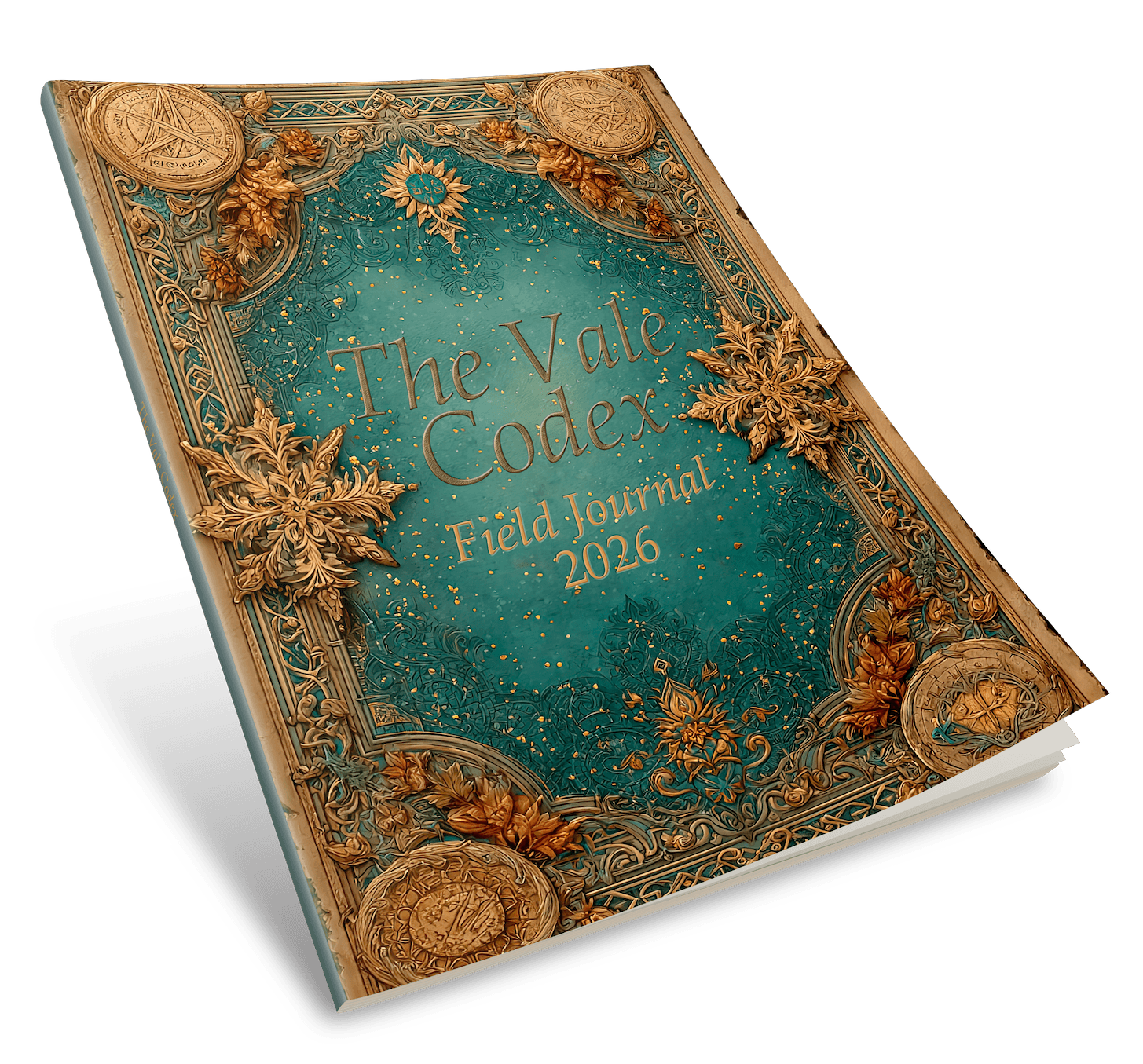
"GREAT NEWS... The 2026 Vale Codex Field Journal is available to download NOW!
The 48-page journal is a friend to carry on your own journey, expanding your mind and illuminating your path.
Tap this link to find out how to get your complimentary PDF copy right now!"
Kind regards, Rowan.