ROWAN VALE
Lammas Breads and Kitchen Witchery
It's Lammas, the first harvest festival of the Celtic wheel of the year, the fields, heavy with grain are being cut, and the air carries the scent of ripening fruit. In the day, this was the time to gather wheat and bake the first loaves in gratitude for abundance.
The very name Lammas originates from the Old English "hlafmaesse" or “loaf-mass,” reminding us that bread was not only food, but an offering: a symbol of life shared between land, people, and spirit.
Long before Christian hands broke bread in its name, pagan farmers were twisting dough into offerings, leaving the first tear-offs on altar-stones or ploughshares as payment to the spirits of the field. Bread was never just sustenance. It was a handshake with nature, a way of saying: "We take, but we remember. We eat, but we give back."
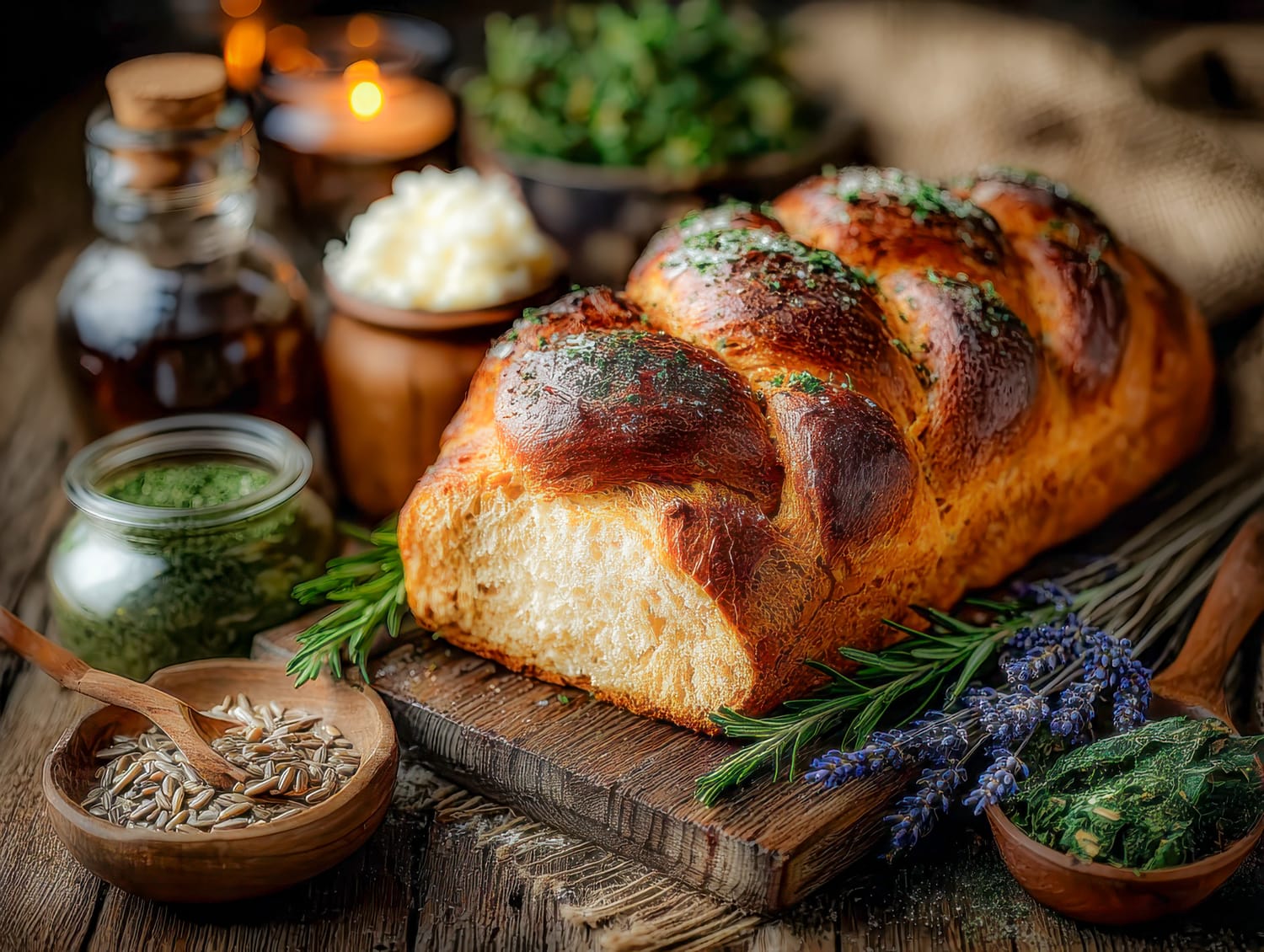
In the practice of kitchen witchery, Lammas bread becomes more than just something to eat. The act of baking is a ritual itself—hands kneading dough reflect the rhythm of the season, herbs folded in carry prayers, and the golden crust is both spell and feast.
When I was small, my aunty Betty (one of the most wonderful people I have ever met) baked the best bread in the whole town, and would sing a song every time she kneaded the dough. I'd be perched on a tall stool next to her baking bench as she worked, totally transfixed. Now, tens of years later, I now realise she was spelling each and every loaf.
Baking with Intention
Every ingredient holds meaning. Flour, ground from harvested grain, embodies transformation—seed to stalk, stalk to flour, flour to bread. Water represents flow and adaptability, yeast sparks life, and salt preserves and protects. When you stir or knead, you can whisper wishes for your household: health, peace, prosperity. As the dough rises, imagine your intentions swelling too, infused with warmth and possibility.
Take a moment before baking to set the tone: light a candle, play music that connects you to the season, or simply breathe deeply, grounding yourself in gratitude. The intention doesn’t need to be elaborate—clarity is more powerful than complexity.
Herbs of the First Harvest
Lammas loaves often carry herbs and seeds that echo the harvest and the magic of the earth.
- Rosemary for remembrance and protection.
- Thyme for courage and strength.
- Sage for wisdom and grounding.
- Lavender for peace and harmony.
- Sunflower seeds for joy and the blessing of the sun.
The shape of the loaf can tell its own story. A simple round loaf recalls the turning wheel of the year. Braided bread speaks of interconnectedness, the weaving of fate and family. Some traditions bake little bread men or women—grain spirits personified—who were later shared or returned to the earth. Try pressing a spiral into your dough with a fingertip, echoing the sun’s journey and the cycles of time. You might braid your dough with sprigs of rosemary tucked between, or sprinkle sesame, poppy, or oat flakes on top as offerings. Each choice adds not just flavour but symbolic richness.
A Recipe (An Invitation)
For one large loaf or two small ones
- 500g bread flour (or half whole wheat, if you want the weight of the field in every bite)
- 1 tsp salt (sea salt, if possible—it carries the memory of the ocean)
- 7g dried yeast (or 15g fresh, crumbled like old parchment)
- 300ml warm water (not hot; think "sun-warmed stream")
- A handful of herbs/seeds (see above)
- 1 tbsp honey or molasses (optional, but it feeds the yeast and sweetens the magic)
1. Mix flour and salt in a bowl large enough to hold your hopes.
2. Dissolve yeast in water with honey, then pour into the flour. Stir until it becomes too thick for a spoon.
3. Turn onto a floured surface and knead for 10 minutes, working in herbs as you go. If the dough resists, knead harder. This is where you prove your commitment.
4. Cover and let rise in a warm place (near a sunny window or atop the fridge) for 1–2 hours, or until doubled. This is the dough dreaming.
5. Shape. Score. Bake at 200°C (390°F) for 30–35 minutes, until the crust sings when tapped.
6. Cool on a rack. Resist the urge to tear too soon—patience is part of the spell.
Why This Matters
We live in a world that treats food as commodity, as convenience. But Lammas bread refuses that. It insists that nourishment is a dialogue, not a transaction. When you bake with intention, you’re doing more than fuelling your body—you’re feeding the story of who you are.
So the end of August, before you reach for the pre-sliced loaf at the store, consider this: What if the simplest act of rebellion is to slow down, mix flour and water, and remember that you, too, are part of the harvest.
The land gives. You take. Then—because this is how magic works—you give back.
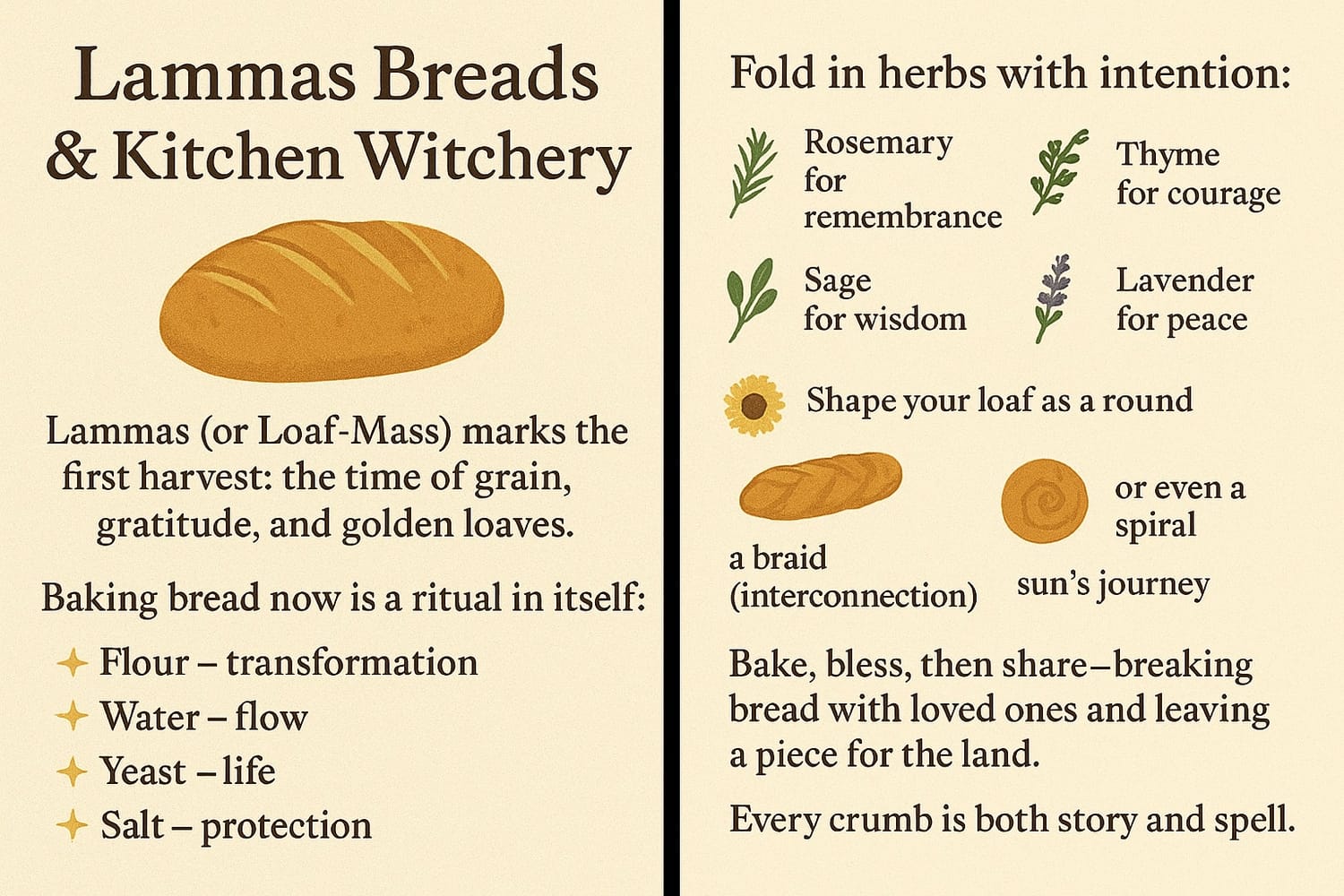
NOTE: Grab yourself a free copy of this downloadable graphic to print out and keep in your kitchen as reference. It's in the shop ready to download right now.
"GREAT NEWS... The 2026 Vale Codex Field Journal is available to download NOW!
The 48-page journal is a friend to carry on your own journey, expanding your mind and illuminating your path.
Tap this link to find out how to get your complimentary PDF copy right now!"
Kind regards, Rowan.