ROWAN VALE
Ancient Stone Beneath the Yorkshire Sky
Ancient Stone, Folklore & Ghosts of the North York Moors
In many places on the North York Moors the landscape seems to remember more than the people who pass through it.
Blakey Howe is one of those places.
Today, many people encounter it walking the Coast to Coast Path, approaching the familiar outline of the Lion Inn across the open moor. The inn appears almost suddenly from the heather, a solitary refuge on the high Blakey Ridge between Farndale and Rosedale.
But just beside it stands something older. Much older.
A low, weathered mound rises from the moorland, topped by a tall stone. It's easy to dismiss the monument as another boundary marker, another piece of old moorland furniture. Yet beneath the stone is a prehistoric burial monument, and around it have gathered centuries of stories, customs and forgotten human activity. Blakey Howe, also known as Cockpit Hill, a name that opens another door into its past.
The Hill of the Ancient Dead
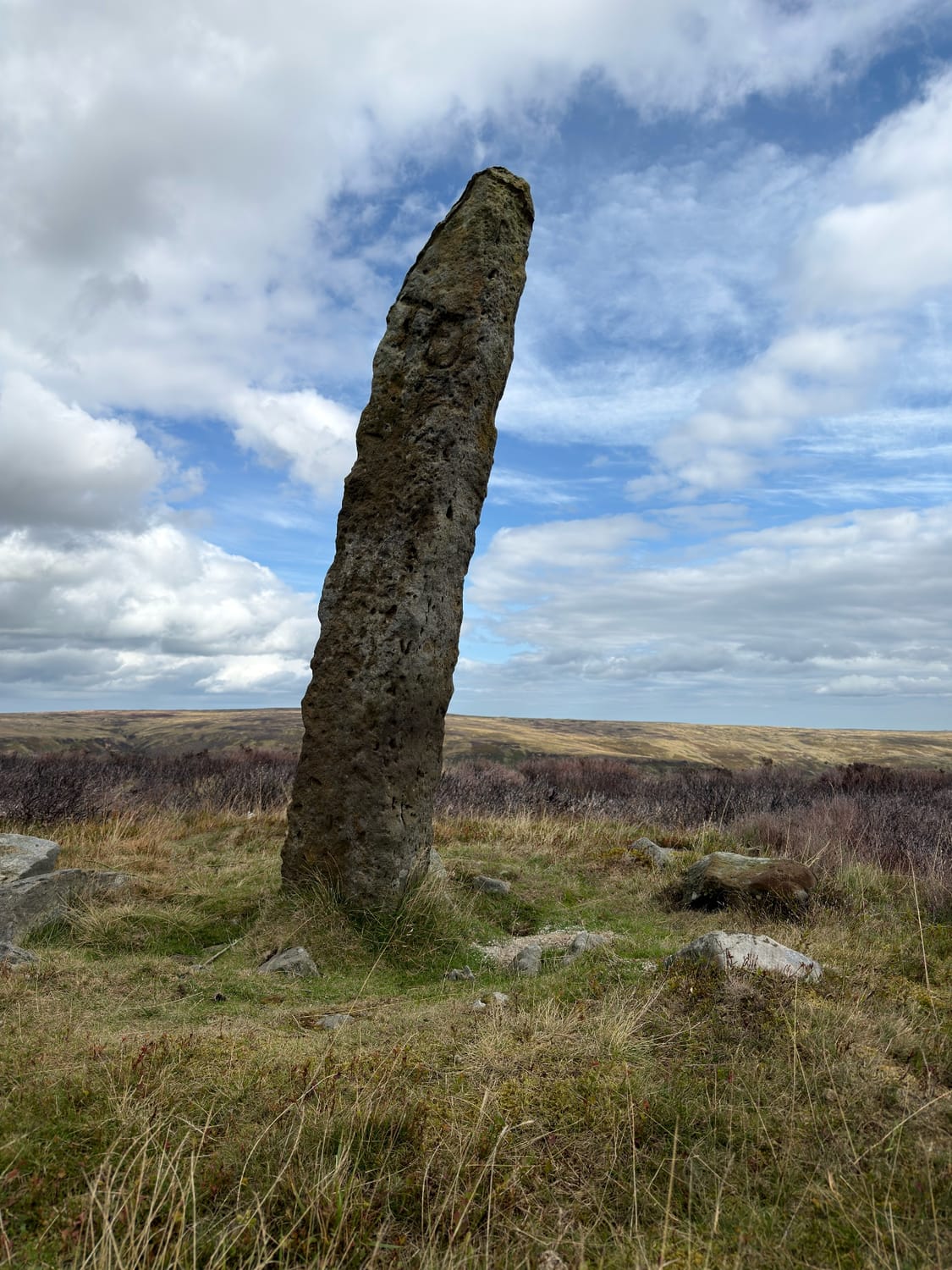
Archaeologically, Blakey Howe is a prehistoric round barrow, thought to date from the Bronze Age. The mound is around 20 metres across and approximately two metres high. It occupies a prominent position on the spine of Blakey Ridge, overlooking the surrounding valleys. That position matters.
Round barrows are not simply places where the dead were buried. Archaeologists believe that some prehistoric barrows also serve as territorial markers, deliberately positioned where they can be seen across the landscape. In other words, this hill may have been marking territory thousands of years before anyone thought of drawing a line on a map.
The irony is beautiful. The prehistoric people who raised the mound are anonymous. Their names have vanished. Their language is lost. We don't know what ceremonies took place here, what songs were sung, or who lies beneath the earth. Yet their monument remains.
The Stone of Thomas Duncombe
Centuries later, another generation would place a boundary stone upon it.
The old marker became a new flag. The landscape acquired another layer of meaning in the form of The Stone of Thomas Duncombe, standing on the southern edge of the barrow as a 1.4 metre-high monolith.
Carved into its western face are the initials T D. Understood to refer to Thomas Duncombe, associated with the Duncombe estate and Lordship of Helmsley in the early eighteenth century. Historic England dates the stone probably to the early 1700s and lists it at Grade II for its historic interest.
There is something particularly evocative about those two letters. T D. A man's initials carved into stone to establish ownership. But the stone itself is a lot older than the name upon it.
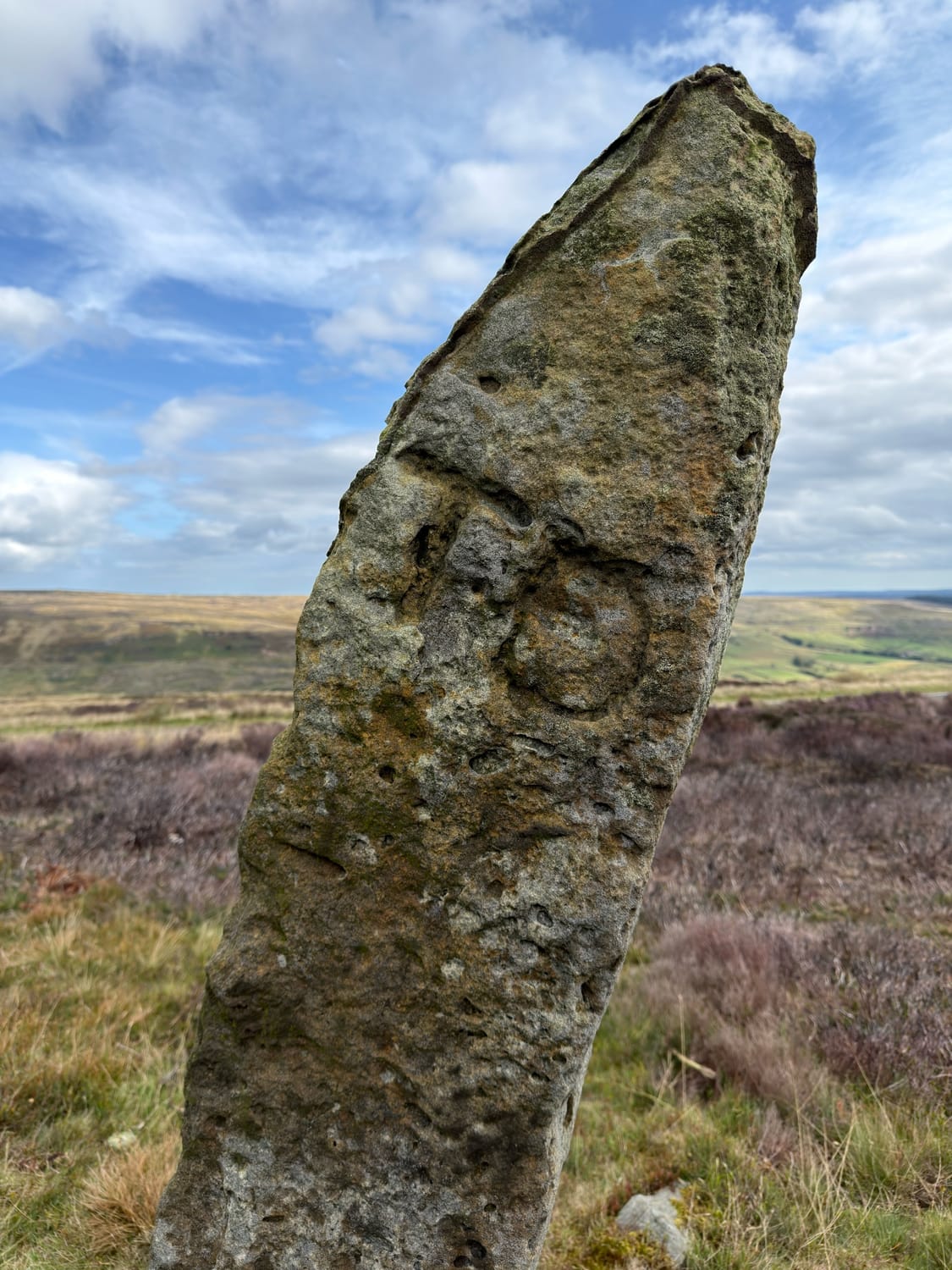
Historic England's archaeological record notes the possibility that the boundary stone was a reused prehistoric standing stone, redressed and placed upon the barrow. If that interpretation is correct, the stone may have passed through several lifetimes.
First, maybe, as a prehistoric monument. Later, as a marker of land or territory. Then as part of an eighteenth-century estate boundary. And now, as a relic encountered by modern walkers. The stone has therefore spent thousands of years marking something, we simply don't know what it originally marked.
When the Ancient Mound Became a Cockpit
There's an even darker chapter in Blakey Howe's history.
At some point, the summit of the ancient mound was excavated, leaving a large bowl-shaped hollow. The depression is approximately six metres across and has been associated with its later use as a cockfighting pit. And so the prehistoric burial mound became an eighteenth-century sporting arena.
The transformation is extraordinary. The spectres under the earth became silent spectators for a gathering of the living.
Historic England records cockfighting here during the eighteenth century, while local historical research indicates that the practice may have continued into the later eighteenth or early nineteenth century. The tradition is recorded strongly enough for Blakey Howe to have acquired its alternative name, Cockpit Hill.
Joseph Ford, writing in Some Reminiscences and Folk Lore of Danby Parish and District, described the cockfighting tradition in the area. According to a later discussion of Ford's work, the contests at Blakey were important events, attracting wealthier participants and landowners, with birds brought from places as far apart as Pickering, Kirkbymoorside, Stokesley and Guisborough. The tradition may have continued until around 1760.
It's a strange thought now. Stand on Blakey Howe today and there's little to suggest the raucousness that once would have echoed around the hollow on this desolate landscape.
Now there's just the low moan of wind combing through heather and ferns, moorcocks chuckling somewhere beyond the ridge, and distant complaints from hardy Swaledale sheep, along with amazing views of the distant folds of Rosedale and Farndale valleys on either side. Yet the hollow remains. The landscape has simply absorbed the memory of the crowd.
The Old Road Across Blakey Ridge
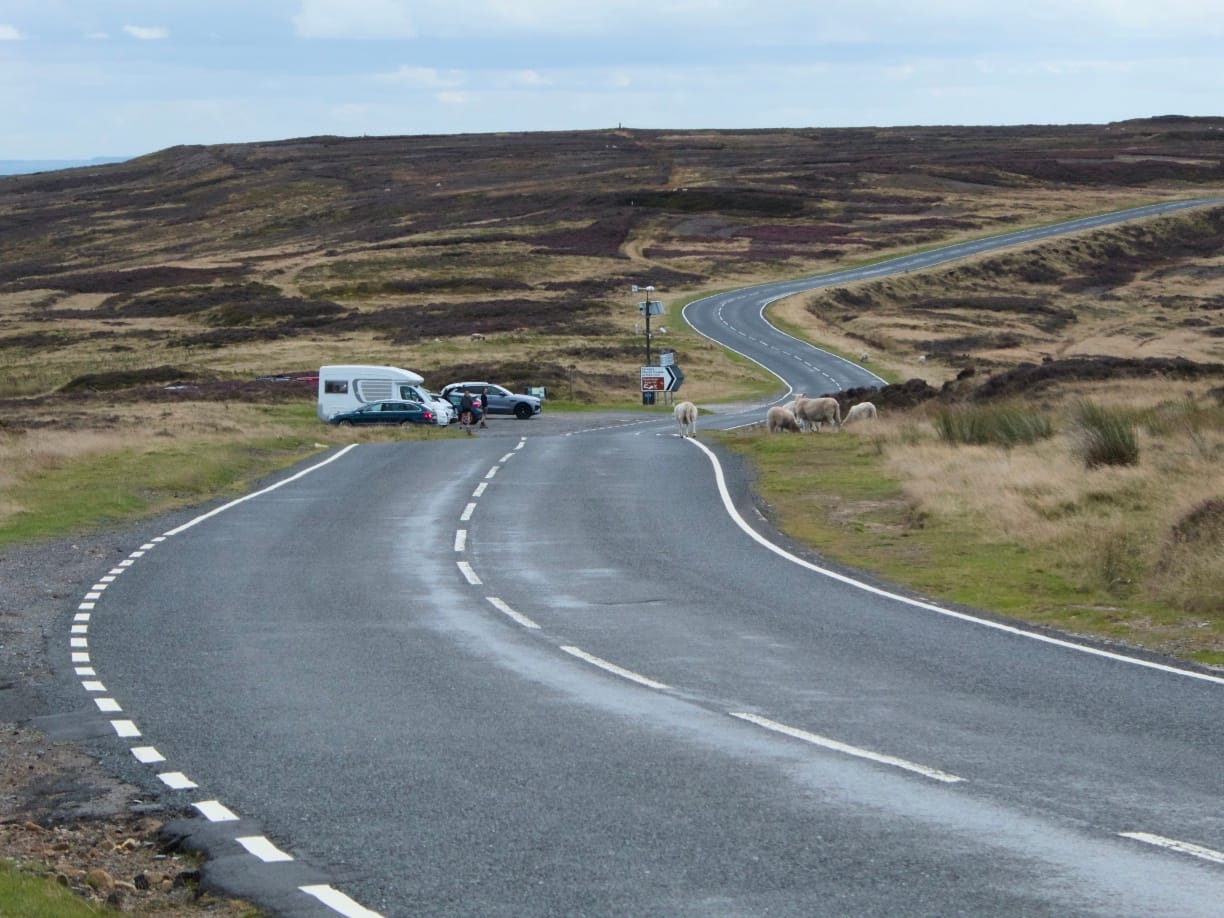
The Old Road running down the spine of Blakey Ridge has never been truly an empty wilderness. Long before modern Coast to Coast walkers arrived with backpacks and waterproofs, people always moved across this landscape.
The ridge forms part of an ancient network of pathways across the North York Moors. The name Blakey itself has deep roots: an early reference from around 1200 records the place as Blakenhow, generally interpreted as meaning Black Howe or Black Hill.
The Lion Inn and the Legends of Blakey Howe
Later came drovers, traders, farmers, miners and travellers, and the Lion Inn became a natural stopping place on this exposed ridge, and local tradition associates its early history with the Crutched or Crouched Friars (“cross-bearing friars”), who were granted land in the area during the reign of Edward III. One longstanding tradition holds that the religious community provided hospitality to travellers and that the inn's story grew from this earlier use of the ridge.
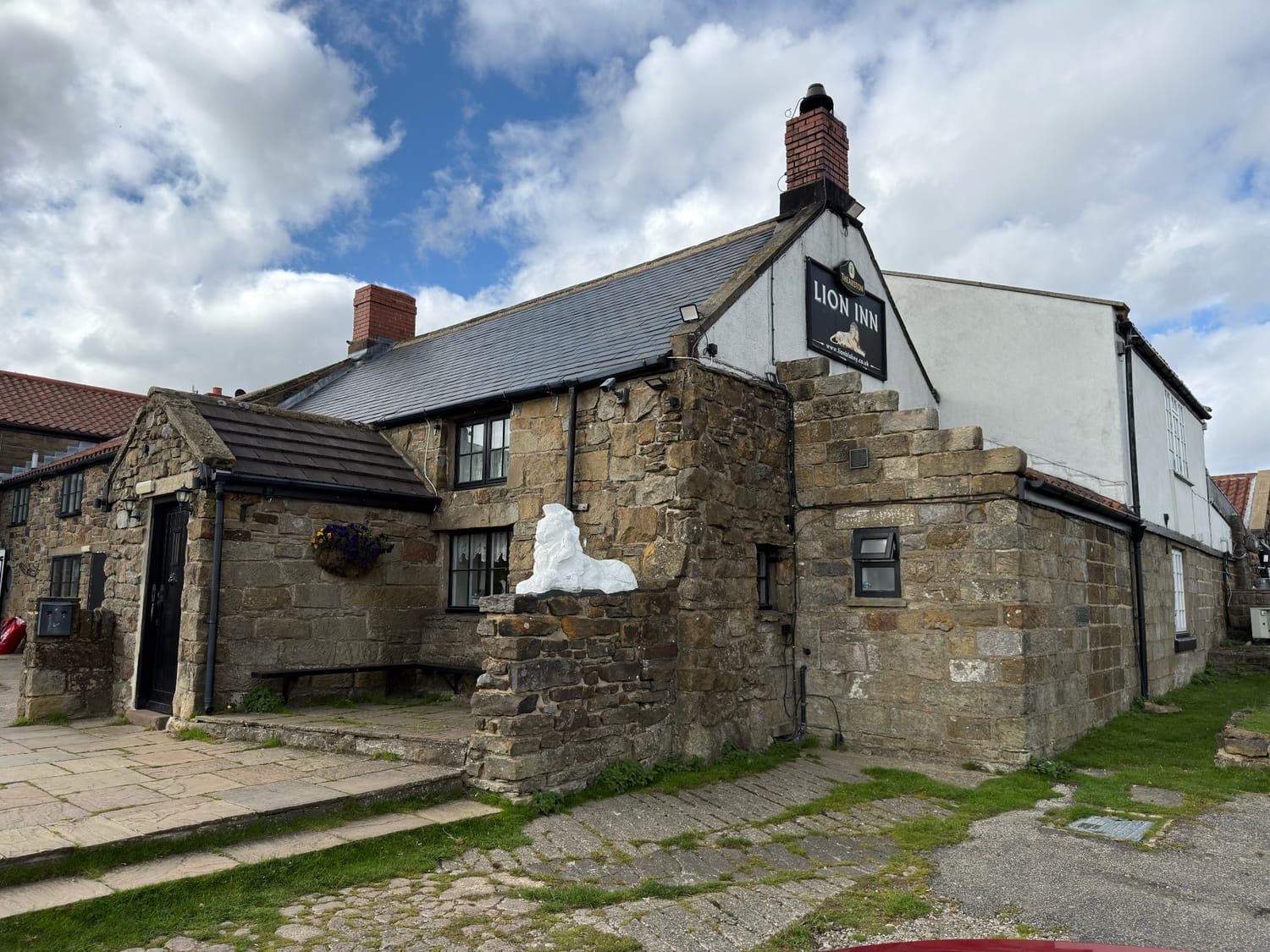
Tales surrounding the inn are difficult to separate completely from legend, but that's part of their charm.
For centuries, isolated inns on high roads were places where stories accumulated. Travellers arrived carrying news from distant valleys. Drovers brought gossip. Farmers exchanged goods. Miners brought tales from underground. On winter nights, with the moor disappearing into drizzle and darkness beyond the windows, there was little else to do but talk.
And stories have a way of settling into places.
The Ghost Behind the Inn
The Lion Inn has its own ghost tradition.
A friendly resident spirit is said to inhabit the old inn, and some modern accounts connect its presence with the ancient burial mound of Blakey Howe immediately beside it.
There’s no archaeological evidence, of course, that a ghost inhabits the barrow. Nor should folklore be mistaken for archaeology. But folklore does tell us something else. It tells us how people have imagined a place. And it's significant that the ghost stories belong to an inn standing beside a prehistoric burial mound.
For generations, people have looked at ancient burial places and wondered about those beneath them. Who were they? What happened here? What did they believe? Did the dead remain somehow connected to the landscape?
The stories may change. The questions don't.
A Landscape of the Living and the Dead
From the top of Blakey Howe, the view explains much of its significance.
This is high country. The ridge forms a natural spine between the valleys. If you stand still and scan the horizon, other prehistoric monuments can be seen from prominent positions across the surrounding moors, creating a landscape in which ancient burial places were not isolated features but part of a wider pattern. The ridge is like graveyard central!
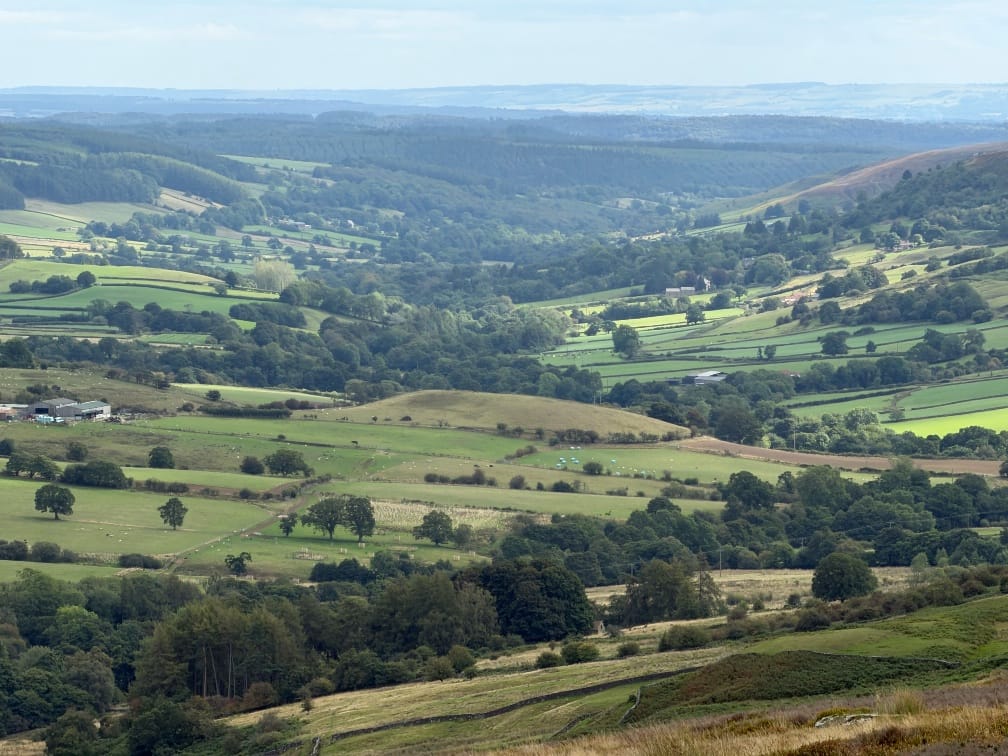
Imagine this place without the road. Without the inn. Without the Coast to Coast signs. Without the telegraph poles, fences and modern markers.
Imagine instead a Bronze Age community standing upon this desolate ridge. The mound is new. The stone has just been placed. Down below, the valleys are greener and wilder. There's an enormous sky above. On a clear night, the gods provide a spectacular starscape. Beyond anything that 'Strictly' or any light-show guru can ever imagine. A tribe member has been buried here. People have gathered to remember them.
Maybe the mound tells the living that this land belongs to their ancestors. Thousands of years pass. The meaning fades, but the hill remains.
Then men come again. They excavate its centre. They turn the hollow into a cockpit.
Another generation arrives with estate boundaries to mark. A stone is raised. Two initials are carved into it. T D.
And still the ancient mound survives, despite everything.
The Stone That Remembers
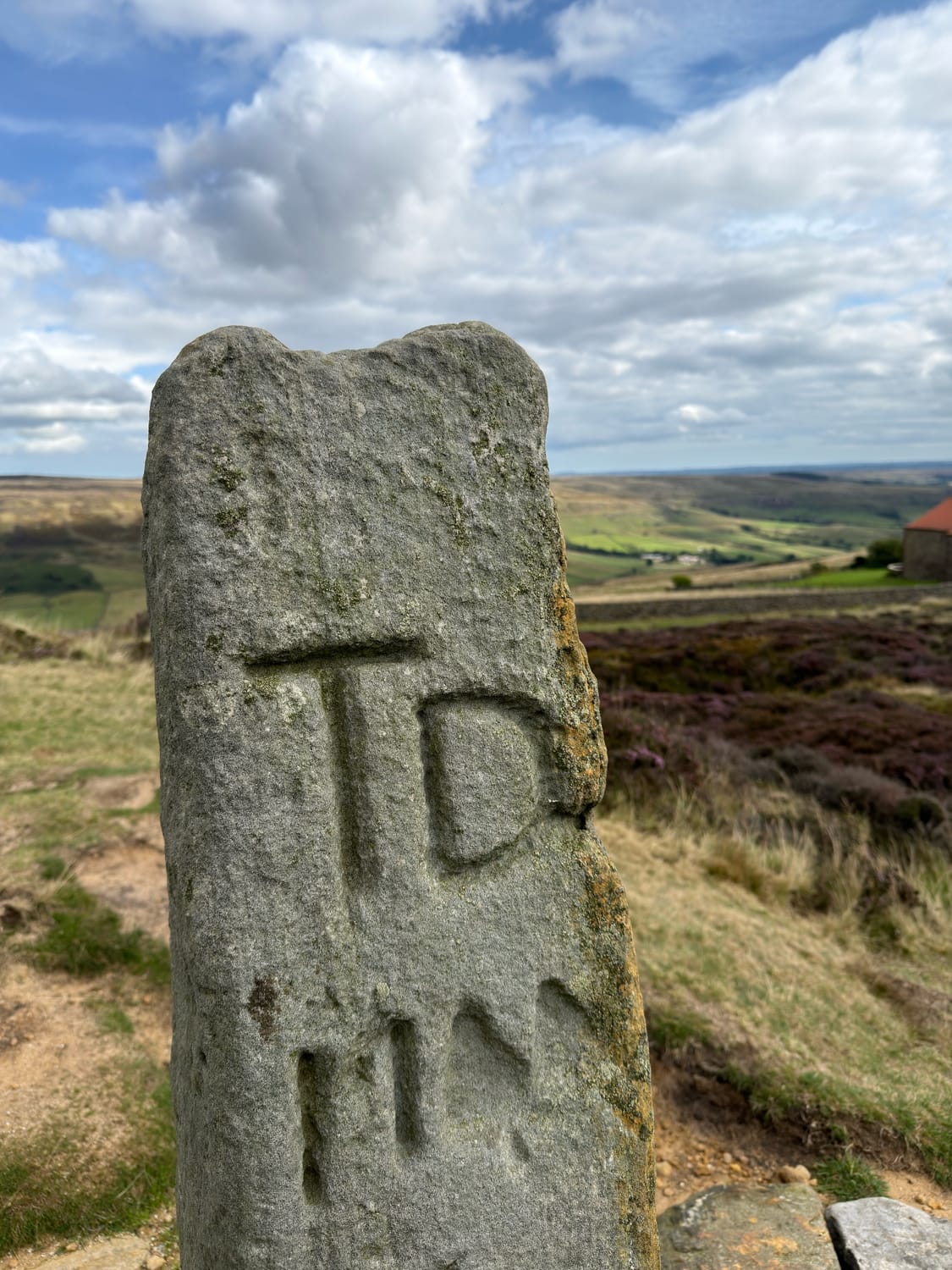
This is what makes Blakey Howe more than an interesting monument beside a popular walking route.
It's a place where different ages have literally been built upon one another.
Prehistoric burial. Territorial marker. Cockfighting arena. Estate boundary. Wayside landmark. Coast to Coast waypoint. And a place around which stories of the unseen have gathered.
None of these histories completely explains the hill. Together, however, they give it character.
So when you pass the stone on the Coast to Coast Path, or the Blakey Ridge road, it's worth stopping. Look at the initials. Look at the hollow in the ancient mound.
Then turn towards the Lion Inn.
Beyond it, the moor rolls away towards Rosedale and Farndale, just as it has for generations.
The wind continues to move through the heather. The stone still stands silent. And somewhere beneath your feet lies a fragment of a world so old that even its stories have been forgotten.
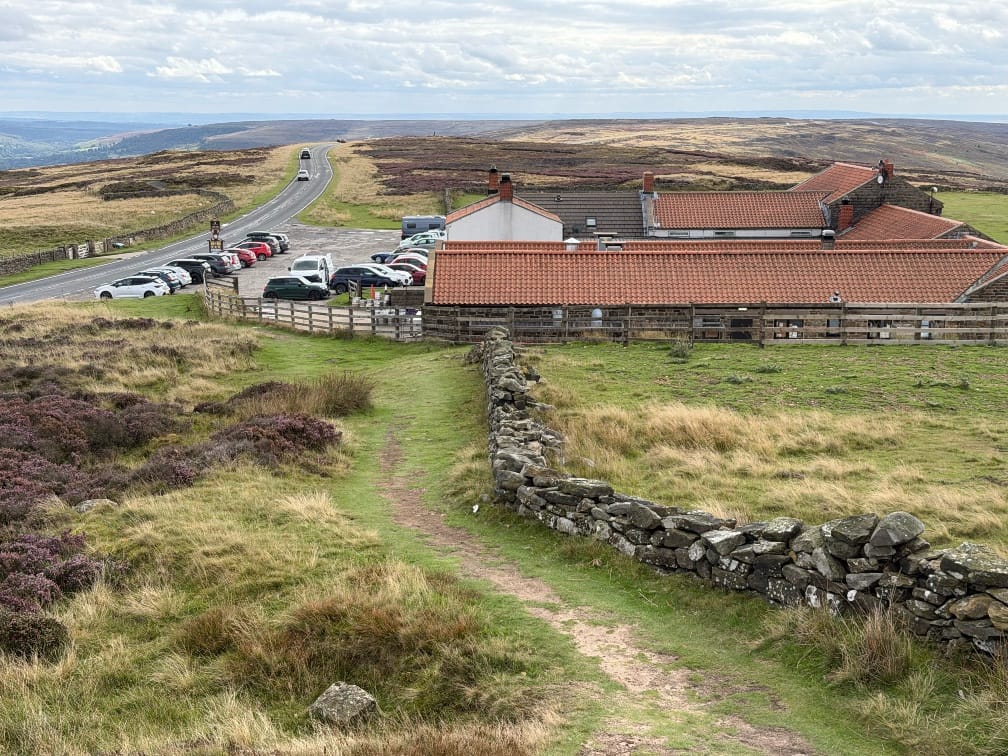
Perhaps that is the true mystery of Blakey Howe.
Not that it is haunted. Not that some lost legend waits beneath the stone.
But that so many different human lives have passed across this one small hill. Lives long forgotten while the hill itself remains.
The dead are gone. The cockfighters are gone. Thomas Duncombe is gone. The miners, drovers and travellers have gone. Even the walkers who pause here will eventually move on.
But the stone still stands. The barrow remains. And the old moor holds its silence.
Maybe it's always been that way. Maybe the land was never meant to tell its secrets at all, only to quietly remember them.
Warmly,
Rowan.
"GREAT NEWS... The 2027 Vale Codex Field Journal is available to download NOW!
The 48-page journal is a friend to carry on your own journey, expanding your mind and illuminating your path.
Tap this link to find out how to get your complimentary PDF copy right now!"
Kind regards, Rowan.