ROWAN VALE
A Yule Altar for Christmas
Christmas originally draws from a mix of Christian celebrations—marking the birth of Jesus—and older pagan traditions like Saturnalia and Sol Invictus, winter festivals known for feasting, gift exchanges, and merrymaking. The selection of December 25 is no accident; it intersects deliberately with earlier Roman festivities, creating an opportunity for Christian leaders—and later, marketers—to build new meanings upon existing social rituals, layering symbol over symbol until the original foundations have become obscured.
Yule Altars: A Seasonal Threshold
A Yule altar is an easy way to mark the winter solstice without all the rigmarole—a small arrangement that acknowledges the turning of the year and offers a quiet focal point as the dark recedes. It needn't be elaborate. Think of it as a seasonal threshold in miniature: a place where light, greenery, and intention meet.
Begin with Light
Most altars start with a candle or a strand of soft lights. The purpose is straightforward: to honour the slow return of the sun after the longest night. Choose what suits your space and feels safe. Lighting it at dusk on the solstice itself is enough—a simple gesture of recognition.
Bring in the Evergreen
A few sprigs of pine, holly, ivy, or yew root the altar in winter's endurance. These are easy to find, hold well indoors, and carry the season's presence without effort. Dried orange slices add warmth and last indefinitely. If you gather greenery yourself, do so thoughtfully—fallen material works perfectly well.
Include What the Land Offers
A handful of objects from your local landscape helps anchor the altar to place. A pine cone, a river stone, a twist of lichen, dried berries, a shard of bark. Choose sparingly—just enough to reflect where you live, without forcing symbolism onto them. Let the materials speak for themselves.
Optional Echoes of Older Custom
If you're drawn to traditional midwinter motifs, consider a small section of wood as a nod to the Yule log. It can be plain or marked lightly—nothing ornate is needed. A shallow dish of water adds reflection and pairs well with candlelight. A feather or carved animal form might represent local wildlife, but this is entirely optional.
A Space for Reflection
Your altar can serve as a place for quiet stock-taking at year's end. You might write down something you wish to carry forward into the returning light and tuck it beneath a stone or sprig. If there's something you'd prefer to release, write that too—then burn it safely in a ceramic dish or simply tear it and compost it. These aren't rituals in any formal sense; they're practical tools for thought.
Keep It Manageable
A Yule altar doesn't need much room. A shelf, a low table, a windowsill—anywhere that can hold a few gathered objects and a light. Keep it simple enough to maintain across the Twelve Days if you choose, refreshing greenery or adding the odd winter find as feels natural.
Clearing Away
When you're ready to dismantle the altar—whether just after the solstice or into early January—return natural materials to the earth or compost them, and store anything you'd like to keep. It's a gentle close to the season's darkest turn, and a nod toward the lengthening days.
A Yule altar requires little: a flame, some greenery, a few objects from the land, and a moment's attention. With that, you create a small seasonal marker—a threshold acknowledging the solstice in a calm, considered way.
Compliments of the season, Rowan.
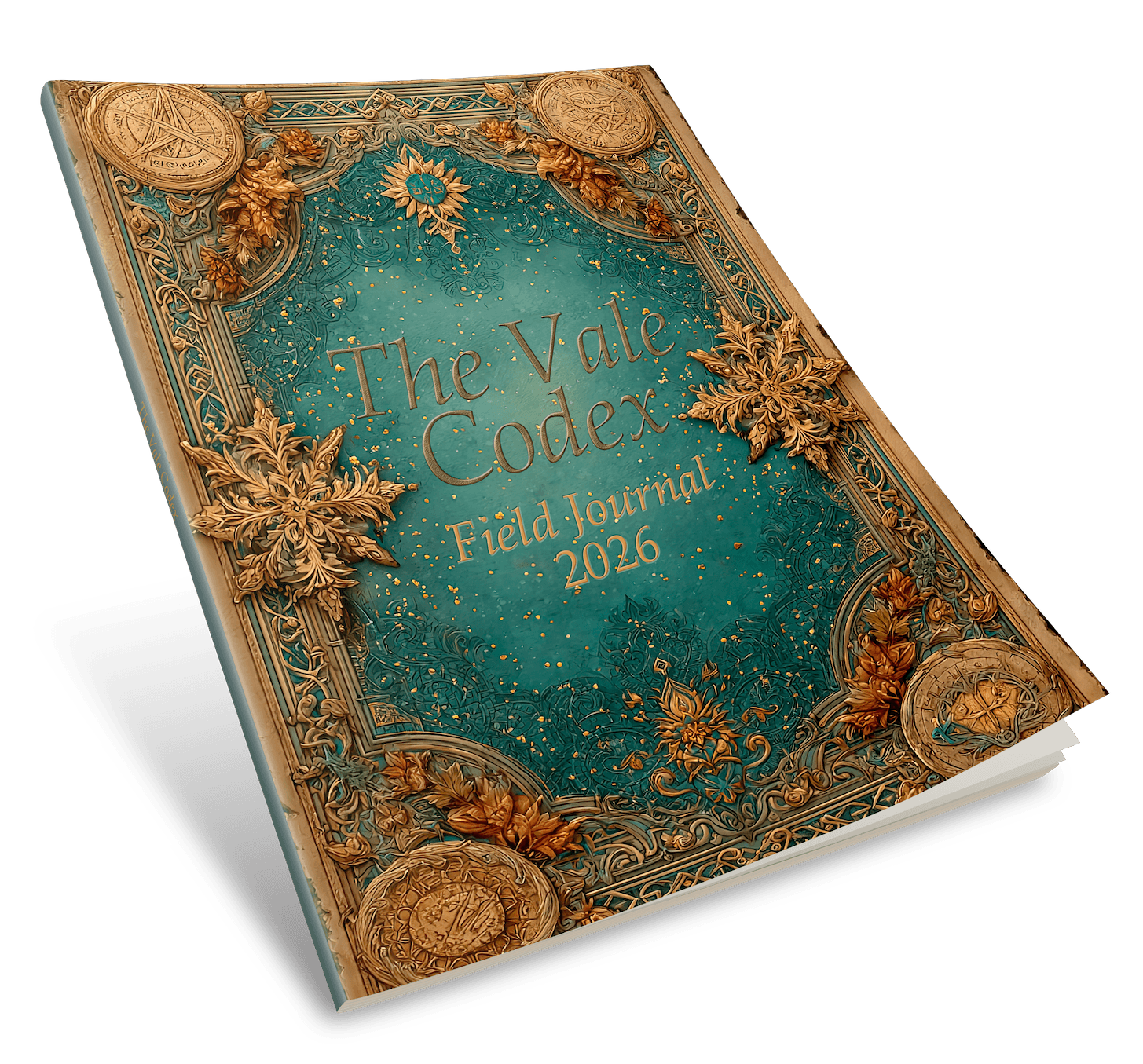
"GREAT NEWS... The 2026 Vale Codex Field Journal is available to download NOW!
The 48-page journal is a friend to carry on your own journey, expanding your mind and illuminating your path.
Tap this link to find out how to get your complimentary PDF copy right now!"
Kind regards, Rowan.